
English football before 1992 and English football after 1992 are two different sports played in the same country by the same people under the same rules. The stadiums are different. The money is different. The players are different. The global reach, the cultural significance, the commercial scale, all of it changed so fundamentally in 1992 that everything that came before feels like it belongs to a different era entirely.
It does belong to a different era. The Premier League created the dividing line. And the story of how it came into existence, how a group of clubs decided to break away from the Football League and form their own competition, is one of the most consequential stories in the history of British sport.
My dad watched the old First Division. He watched football in grounds that were crumbling, in an atmosphere that was often hostile, during a period when the sport’s reputation was defined as much by hooliganism and stadium disasters as by anything that happened on the pitch. He has told me about what English football felt like in the 1980s and the picture he paints is so far removed from the glossy, globally marketed product that exists today that the two versions sound like they come from different countries.
The transformation did not happen overnight. But it started on a specific date with a specific decision, and everything that the Premier League has become across the past three decades flows from what happened in 1992.
The State of English Football Before the Break
To understand why the Premier League was created you have to understand what English football looked like in the late 1980s and why the people running the biggest clubs believed that radical change was the only path to survival.
The picture was bleak. Genuinely, comprehensively bleak in ways that are difficult to imagine from the perspective of 2026.
English clubs had been banned from European competition since 1985 following the Heysel Stadium disaster, in which thirty nine people died before the European Cup final between Liverpool and Juventus. The ban lasted five years and severed English football from the continental game at precisely the moment when European football was beginning to generate significant commercial revenue from television and sponsorship.
The Bradford City fire in 1985 killed fifty six people. The Hillsborough disaster in 1989 killed ninety seven Liverpool supporters. The Taylor Report that followed Hillsborough recommended the conversion of all top flight grounds to all-seater stadiums, a transformation that would cost hundreds of millions of pounds that most clubs did not have.
Hooliganism had driven families away from grounds. Attendances had declined through the 1980s. The stadiums themselves were dangerous, dilapidated and unwelcoming. The image of English football internationally was one of violence, tragedy and decay.
The television money was minimal by modern standards. The Football League negotiated broadcast deals collectively on behalf of all ninety two member clubs, with the revenue distributed across all four divisions. The biggest clubs, the ones generating the majority of the interest and the audience, received a share that they believed was disproportionately small relative to their contribution.
The frustration among the top clubs was genuine and it was growing. They were generating the interest. They were filling the grounds. They were producing the football that people wanted to watch. And the revenue that their football generated was being distributed across a system that included clubs they believed were not contributing proportionally to the commercial appeal.
The ingredients for a breakaway were all present. All that was needed was the catalyst.
The Blueprint
The catalyst came from an unlikely source. In 1990, Greg Dyke, then managing director of ITV Sport, began conversations with the chairmen of the five biggest clubs in English football. Manchester United, Liverpool, Tottenham, Everton and Arsenal. The so-called Big Five.
Dyke’s proposal was straightforward. The top clubs should break away from the Football League and form their own competition. This new competition would negotiate its own television deal, independent of the Football League’s collective agreement. The revenue would be shared among the breakaway clubs rather than distributed across all ninety two.
The clubs were receptive. The numbers made sense. A separate television deal negotiated by a competition containing only the most attractive clubs in English football would generate significantly more money than the collective Football League agreement. And crucially, the money would stay within the top division rather than being redistributed downward.
The Football Association, which had long had a complicated and occasionally hostile relationship with the Football League, saw an opportunity. If the top clubs broke away under the FA’s umbrella rather than independently, the FA would gain oversight of the most commercially valuable competition in English football. The FA backed the breakaway.
In 1991, the top division clubs signed the Founder Members Agreement, the document that formally established the FA Premier League as a separate entity from the Football League. The agreement was signed by the chairmen of all twenty two First Division clubs. The Football League, which had governed the top flight of English football since 1888, lost its most valuable asset overnight.
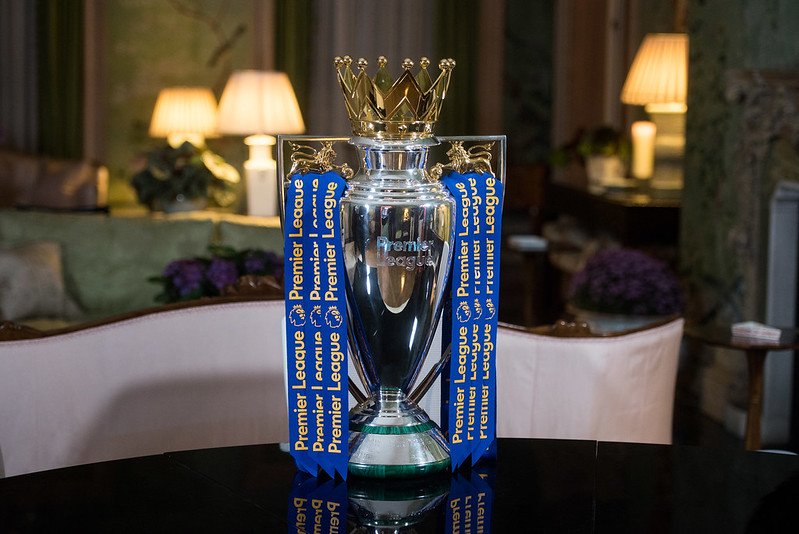
The Premier League was born. The first season kicked off on August 15 1992. The world had not yet realised what was coming.
The Sky Deal That Changed Everything
The television deal that accompanied the launch of the Premier League was the single most transformative commercial event in the history of English football.
BSkyB, Rupert Murdoch’s satellite television company, secured the rights to broadcast Premier League football for £304 million over five years. The deal was negotiated in competition with ITV, whose involvement had originally catalysed the breakaway, and it was won by Sky in circumstances that generated significant controversy and accusations of backroom dealing.
The £304 million figure was enormous by the standards of 1992. The previous Football League television deal had been worth £44 million over four years. Sky was paying nearly seven times as much for the rights to a competition that did not yet exist and whose audience was, at that point, entirely theoretical.
Murdoch understood something that the rest of the British media industry was slower to grasp. Live football was the one product that could drive satellite television subscriptions at scale. People would pay a monthly fee to watch their team play. They would install a satellite dish on their house. They would change their viewing habits and their spending habits and their Saturday afternoon routines to access live football in their living rooms.
He was right. Sky’s subscriber numbers grew dramatically on the back of live Premier League football. The relationship between the two entities became symbiotic. Sky needed football to sell subscriptions. Football needed Sky’s money to transform itself. Both got what they wanted and the scale of what they built together exceeded anything either had anticipated.
The money changed everything. The stadiums were rebuilt. All-seater grounds replaced the crumbling terraces. The facilities improved. The playing surfaces improved. The training grounds improved. The salaries increased, attracting better players from across Europe and eventually from across the world.
The product improved. And as the product improved, the television deals grew. Each renewal brought more money. Each increase in money produced a better product. The cycle fed itself across three decades and shows no sign of stopping.
The Foreign Revolution
The Premier League’s early years were still recognisably English in character. The players were predominantly British. The managers were predominantly British. The football, while improving, was still built on the physical and direct foundations that had characterised the English game for decades.
The foreign revolution changed that permanently.
Eric Cantona arrived at Leeds and then Manchester United in 1992, the first major foreign import of the Premier League era, and his impact demonstrated immediately that overseas players could not just compete in English football but transform it. His technical quality, his personality, his sheer difference from anything the English game had previously contained, opened a door that has never closed.
Jurgen Klinsmann at Tottenham. Gianfranco Zola at Chelsea. Dennis Bergkamp at Arsenal. Each arrival brought a technical standard and a footballing intelligence that raised the quality of the league and demonstrated to other foreign players that the Premier League was a destination worth considering.
Arsene Wenger’s arrival at Arsenal in 1996 accelerated the process dramatically. His recruitment of French, Dutch, Brazilian and African players, combined with his training methods and his tactical sophistication, proved that a club built around foreign talent managed by a foreign coach could not just compete but dominate in English football.
By the early 2000s the Premier League was the most cosmopolitan football league in the world. Players from every continent, speaking every language, representing every football culture, competing in English stadiums that had been rebuilt with television money and that were now consistently full for the first time in decades.
The transformation from the insular, predominantly British, financially precarious First Division of the late 1980s to the globally diverse, commercially dominant Premier League of the early 2000s took less than a decade. The speed of the change was extraordinary. The completeness of it was unprecedented.
The Global Phenomenon
The Premier League’s growth from a domestic competition with a television deal into a genuinely global sporting phenomenon happened gradually and then suddenly in the way that commercial transformations often do.
The overseas broadcast rights, which were a modest addition to the domestic deal in the early years, became the primary driver of revenue growth from the mid-2000s onward. The Premier League was being watched in living rooms across Asia, Africa, the Americas and the Middle East. The time zone was convenient for Asian audiences. The drama was compelling for everyone. The quality of the football, improved by the influx of global talent and the investment of television money, was consistently higher than any other league in the world.
The clubs became global brands. Manchester United, Liverpool, Arsenal and Chelsea developed supporter bases that spanned continents. The replica shirt became a global commodity. The Premier League’s commercial partners multiplied and diversified. The revenue grew exponentially.
By 2026 the Premier League generates more television revenue than any other football league in the world by a significant margin. The current domestic deal alone is worth over £6 billion. The international rights add billions more. The total commercial revenue of the competition exceeds anything that the founders of the breakaway could have imagined when they signed the Founder Members Agreement in 1991.
The gap between the Premier League and every other domestic league in world football, in terms of revenue, global audience and commercial reach, has grown with every passing year. La Liga, the Bundesliga, Serie A and Ligue 1 are all excellent competitions containing excellent clubs. None of them approach the Premier League’s commercial scale.
What Was Lost
The story of the Premier League’s creation is overwhelmingly a story of growth, improvement and commercial success. The football is better. The stadiums are better. The global reach is extraordinary. The product, by almost any measurable standard, is superior to what existed before 1992.
But something was lost in the transformation and I think it is worth acknowledging honestly because the cost of progress is part of the story even when the progress itself is genuine.
The connection between football clubs and their local communities was weakened by the commercialisation that the Premier League accelerated. Ticket prices rose steadily across three decades, pricing out the working class supporters who had built the culture that made English football attractive to television in the first place. The atmosphere in grounds, while still passionate, changed in character as the demographic of the crowd shifted from predominantly local, working class supporters to a broader mix that included tourists, corporate guests and supporters who had been priced into occasional attendance rather than regular commitment.
The lower divisions of English football, the clubs that the breakaway was specifically designed to leave behind, were damaged financially by the separation. The revenue gap between the Premier League and the Championship, between the Championship and League One, between League One and League Two, grew wider with every television deal. The pyramid that had connected all ninety two clubs in a single system was fractured and the fracture has never healed.
The Saturday 3pm kickoff, the ritual that had structured English football for a century, was dismantled by the television scheduling requirements that accompanied each new broadcast deal. Matches were spread across the weekend and the week to maximise broadcast revenue, disrupting the matchday experience for season ticket holders and fragmenting the communal experience that had been one of English football’s most distinctive characteristics.
These losses are real. They are the price that English football paid for the transformation that the Premier League delivered. Whether the price was worth paying depends on what you value most about the sport and that is a question that every football supporter answers differently.
The Legacy
The Premier League is thirty four years old. In that time it has grown from a breakaway domestic competition with a single television deal into the most commercially successful, most widely watched, most globally influential football league in history.
The stadiums are full. The football is extraordinary. The players are the best in the world. The commercial machine generates billions. The global audience numbers in the hundreds of millions for every matchday.
None of it existed before 1992. All of it flows from the decision by twenty two clubs to break away from the Football League and form their own competition. The decision that Greg Dyke catalysed, that the FA backed, that Sky funded, and that changed English football so fundamentally that the sport before and after it are barely recognisable as the same thing.
My dad watched the old First Division in crumbling stadiums during a period when English football’s reputation was at its lowest point in living memory. I watch the Premier League in rebuilt grounds during a period when the competition is the most powerful sporting product on the planet.
The distance between those two experiences, separated by a single generation, is the measure of what the Premier League created.
Whether you view the creation as salvation or as the beginning of football’s commercialisation, whether you celebrate the growth or mourn the losses, depends on your perspective. Both positions have merit. Both contain truth.
What is beyond argument is that 1992 changed English football forever. The decision was made. The breakaway happened. The money arrived. The world started watching.
And nothing about the game has ever been the same since.