Every great dressing room has a story about the day someone stood up to the manager. Most of them end badly for the player. A few become legends because of how the manager handled it afterwards.
Paul Ince’s row with Sir Alex Ferguson belongs in the second group. Speaking to talkSPORT, Ince described a shouting match so heated that his team-mates had to hold him back, followed by two days of complete silence. What ended it was not an apology or a meeting. It was a game of head tennis and one of the best one-liners I have ever heard from a football manager.
A Big Night at Carrow Road
The setting matters. It was the 1992/93 season, the first of the Premier League, and Manchester United had not won the league title since 1967. Norwich City were one of their main rivals that year, and United went to Carrow Road in April for a game that felt like it could decide a lot.
United won comfortably. Ince himself was not sure of the exact score when he told the story, but he remembered it as a convincing victory over a side who were genuinely in the race. He felt he had played well too.
Then, with about five minutes left, he went on what he called a little mazy run, lost the ball, and Norwich broke up the other end and almost scored.
The Hairdryer
Ince did not think much of it. When the players got back into the dressing room, everyone was celebrating, patting each other on the back and saying well done. He joined in.
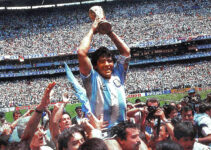
Then Ferguson came storming through the door. Ince described him arriving like Rambo, and he went straight for his midfielder. He wanted to know what Ince thought he was doing. He told him he was not Diego Maradona, and that his job was to win the ball and give it to the best players.
That was the famous hairdryer treatment, and most players took it on the chin. Ince did not. As he put it, he bit back. In his mind, United had just beaten title contenders on their own ground and he had had a decent game, so he could not understand where the anger had come from.
Four Team-Mates, or Eight?
What followed was a full shouting match between the manager and one of his most important players. It got so heated that team-mates had to step in and hold Ince back.
When talkSPORT’s Jim White put it to him that the story had always been that four players were needed to restrain him, Ince had a lovely answer. He said he thought it was eight, but he would take four.
I love that, because it tells you exactly what sort of character he was. Even 30 years later, he cannot quite resist making the story a little bigger.
48 Hours of Silence
The row did not end in the dressing room. Ince said that when they got back on the coach, Ferguson did not speak to him, and he did not speak to Ferguson.
That went on for 48 hours. He did not even say good morning to his manager. For a player at a club as tightly run as United under Ferguson, that is an extraordinary thing to imagine. The manager was the centre of everything, and his star midfielder was refusing to talk to him.
The Head Tennis Game
The way it ended is the best part of the story. On the Thursday, the players were playing head tennis in training, with Ferguson acting as referee. It was first to 11, and Ince’s side were level at 10-10.
The ball went up, Ince produced an overhead kick, and it landed right in the corner of the court. His team celebrated the winner.
Then Ferguson shouted that the ball was out. Ince was certain it was in. But because he had not spoken to his manager for two days, he could not argue the decision without breaking his silence. Ferguson awarded the game to the other side.
As Ince walked away, fuming, he heard his name. Ferguson shouted after him that there was only one Guv’nor here, son.
Ince was famously known as The Guv’nor. Ferguson had taken his nickname and turned it on him. Ince said he burst out laughing, and from that moment the two were speaking again.
Why It Worked
I think this is a brilliant example of man management, and it is easy to miss how clever it was.
Ferguson did not back down on the original point. He never apologised for the hairdryer, and he never conceded that Ince had been right to argue. But he also knew that a player of Ince’s quality and personality was too important to lose over one row.
So he found a way to end it on his terms, with a joke that reminded everyone who was in charge without humiliating the player. It was firm, it was funny, and it let Ince walk away with his pride intact.
Ince seems to see it the same way now. He said Ferguson’s anger was all about standards and doing the right things all the time, and that it showed the greatness of the man. He also admitted that, looking back, he does not think players should confront a manager, any manager.
The Guv’nor at Old Trafford
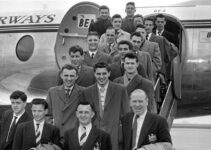
It is worth remembering how good Ince was in that United side. He joined from West Ham in 1989 and spent six years at Old Trafford, winning two Premier League titles, two FA Cups and the League Cup in 1992.
He was the heartbeat of a midfield that set the standard for the early Premier League years. United won that 1992/93 title, ending a wait of 26 years, and the confidence and aggression Ince brought were a big part of it.
His relationship with Ferguson was never simple. He was sold to Inter Milan in 1995, a move that surprised plenty of United fans. But this story shows there was real respect between them, even when they were at each other’s throats.
Could It Happen Now?
I find it hard to imagine this story in the modern game. Today, a row like that would probably leak within hours, there would be talk of a dressing room crisis, and the player’s agent might be on the phone to other clubs by the weekend.
As a Palace fan, I have watched plenty of managers come and go, and I have seen how quickly a falling-out with a key player can turn into a saga. Ferguson’s approach was old-fashioned, but it kept the issue inside the club and solved it in two days.
My Verdict
I think this is one of the great Ferguson stories, because it shows both sides of him. The temper that made players fear him, and the wit and judgement that made them want to play for him.
Ince lost the argument, lost the head tennis game and lost the right to his own nickname, at least for one afternoon. He still talks about it with a smile.
The question is how many modern managers would have the confidence to settle a row with a joke, and how many players would still be laughing about it three decades later.