I never saw Brian Clough manage a football match in person. I was too young, and by the time I was old enough to properly understand what I was watching he was already gone, his health broken and his extraordinary career reduced in the public consciousness to a caricature of the man he had actually been.
But I grew up hearing about him. My dad talked about him the way people talk about figures who leave a mark so deep that the stories outlive the person telling them. Clough said this. Clough did that. You would not believe what Clough once told a journalist. The anecdotes arrived fully formed, already legendary, carrying the weight of someone who had done things in football that nobody before or since has managed to replicate.
The older I got and the more I read and learned about Brian Clough, the more I understood why those stories never got old. Because the reality of what he achieved, stripped of the mythology and examined plainly, is so extraordinary that it almost defies rational explanation.
He is the greatest manager England has ever produced. He is also the greatest manager England never had. And those two things exist in the same sentence because of a failure of imagination and nerve at the Football Association that English football has never properly confronted.
The Player Who Should Have Had More
Before Brian Clough became the most compelling figure in English football management, he was one of the most prolific goalscorers the game had ever seen.
Between 1955 and 1964 he scored 251 goals in 274 appearances for Middlesbrough and Sunderland combined. Numbers that in the modern era would generate a level of global attention that is difficult to comprehend. He was fast, fearless, technically gifted and possessed of the kind of predatory instinct in front of goal that cannot be coached into a player because it either exists or it does not.
Then on Boxing Day 1962, a collision with Bury goalkeeper Chris Harker tore the ligaments in his right knee. He was twenty seven years old. He played only a handful of games after that, never recapturing what he had been, and retired at twenty nine having been robbed of what should have been his peak years.
That injury shaped everything. The frustration of a man who knew exactly how good he was and had been denied the stage to prove it properly never left Clough. It turned him outward, into management, into a relentless need to prove himself through other people. The hunger that the injury did not extinguish, it redirected. And English football is richer for it even if Clough himself paid a significant personal cost.
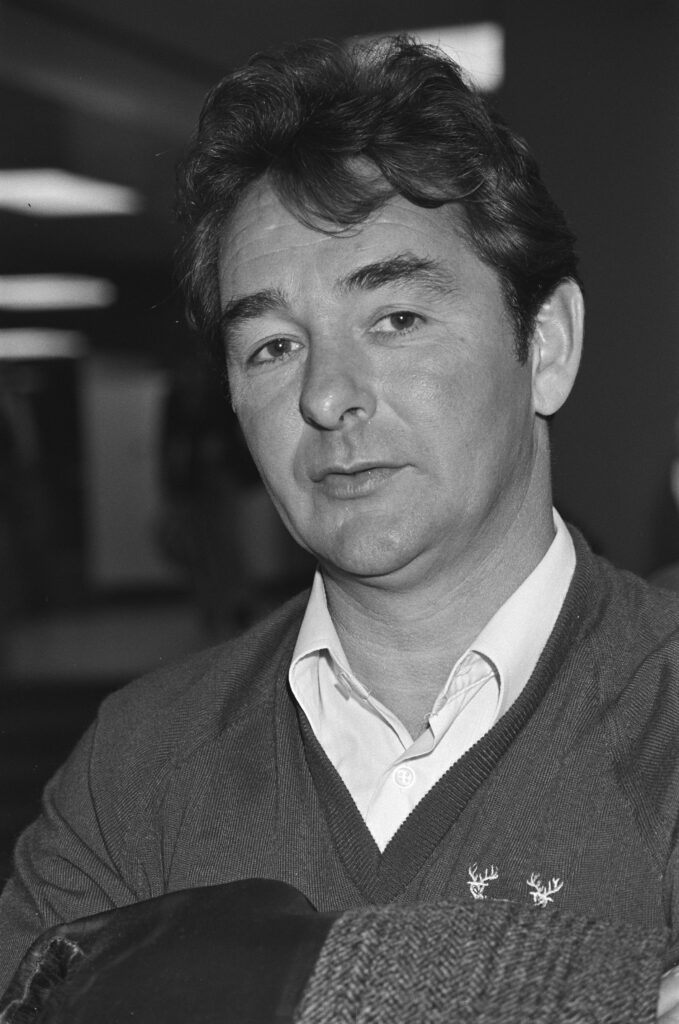
The Derby Miracle
Brian Clough arrived at Derby County in 1967. The club was in the Second Division, the ground was a mess, the finances were precarious and there was no obvious reason to believe that anything remarkable was about to happen.
Within five years Derby County were First Division champions.
Think about that for a moment in its proper context. A Second Division club, unremarkable in almost every respect, transformed into the best team in England in five years by a manager who had never managed at the top level before and who was doing it with players that bigger, wealthier clubs had largely overlooked.
The partnership with assistant Peter Taylor, which would define Clough’s career, was central to everything. Taylor found the players. Clough made them better. The combination was so effective that it became one of the most celebrated working relationships in football history. Taylor’s eye for talent complemented Clough’s ability to extract performances that players did not know they were capable of producing.
The Derby title in 1972 was not a fluke or a happy accident. It was the product of meticulous work, bold decision making and a manager who genuinely believed, regardless of the evidence around him, that he could compete with anyone. That self belief was simultaneously his greatest asset and the source of most of his problems.
Forty Four Days
The Leeds United appointment in 1974 is one of the most fascinating and destructive episodes in football management history and it deserves more than the brief summary it usually receives.
Don Revie had just left Leeds for the England job, taking with him the loyalty of a dressing room he had built over thirteen years. The players were his. The culture was his. The way of doing things was entirely his construction and his alone.
The Leeds board appointed Clough as his replacement. It was the most obviously wrong decision imaginable and it produced exactly the outcome anyone paying attention should have predicted.
Clough walked into that dressing room and told the players, with characteristic bluntness, that they could throw their medals in the bin because they had won them by cheating. He systematically dismantled everything Revie had built in terms of the team’s identity and culture. The players hated him. The dressing room turned against him before he had managed a meaningful game.
Forty four days after taking the job, Clough was gone. Dismissed. The most gifted manager in the country, possibly in Europe, had lasted less than six weeks at one of the biggest clubs in England.
The Leeds disaster revealed something important about Clough that his admirers sometimes gloss over. His genius was inseparable from his personality. He could not manage in a way that was not entirely, completely, uncompromisingly his way. When the environment resisted that, when the existing culture was too strong or too entrenched to be immediately dismantled, he did not adapt. He doubled down. At Leeds that approach was catastrophic.
It is also, paradoxically, why what came next was so extraordinary.
Nottingham Forest and the Impossible Achievement
Nottingham Forest. European Cup winners. 1979. European Cup winners again. 1980.
I want you to sit with those facts without rushing past them because I genuinely believe they represent the single greatest achievement in the history of English football management and I am not sure the game has ever fully appreciated them.
Forest were a mid table First Division club when Clough arrived in 1975. Not a sleeping giant, not a club with a history of competing at the highest level, not a club with the financial resources or the infrastructure that the game’s elite possessed. An ordinary club in an ordinary city with no particular reason to believe that anything extraordinary was coming.
Within three years Clough had won the First Division title with them. That alone would have been remarkable. What followed was beyond remarkable.
Back to back European Cups. Consecutive victories in the most prestigious club competition in the world, beating Hamburg in 1980 to retain a trophy they had won the previous year against Malmo. Nottingham Forest, managed by Brian Clough, were the best club side in Europe for two consecutive seasons.
It has never been done since by an English club. It may never be done again, certainly not by a club of Forest’s size and resources. The achievement exists in its own category, separate from everything else in English football history, because there is genuinely nothing to compare it to.
The players Clough assembled at Forest were, individually, good but not great. What he did to them collectively, the organisation, the belief, the clarity of purpose he instilled, turned them into something that defeated the best clubs in Europe twice in a row. That is management at a level that no measure or metric can adequately capture.
The England Question
Here is where the story stops being triumphant and becomes something more complicated and more sad.
Brian Clough never managed England. Despite being the most successful English manager of his generation, despite achieving things with unfashionable clubs that no England manager has come close to replicating, the Football Association never gave him the job.
The reasons were never stated plainly but they were understood by everyone paying attention. Clough was too outspoken. Too difficult. Too willing to say in public what other people in football only said in private. He embarrassed the FA on multiple occasions with comments that were accurate but impolitic. He had opinions about the game and the people running it that were not always welcome in the corridors of Lancaster Gate.
There was also, and this is difficult to fully document but impossible to ignore, a class element to the FA’s reluctance. Clough was working class, blunt, self made, entirely uninterested in the social conventions that the football establishment expected its major figures to observe. The men making decisions at the FA were not like him and did not entirely trust him. That distrust cost English football enormously.
He applied for the England job multiple times. He was overlooked for Ron Greenwood in 1977. He was overlooked for Bobby Robson in 1982. Each time the same conclusion was reached in private. Too risky. Too unpredictable. Too much of a threat to the comfort of the people making the decision.
What might Clough have done with the England job? We will never know. But a man who won the European Cup twice with Nottingham Forest, who took Derby County from the Second Division to the league title, who was by any objective measure the finest manager in the country for a decade, deserved the chance to find out.
The Man Behind the Myth
No honest account of Brian Clough can ignore the complexity of the man behind the achievements.
His relationship with alcohol became increasingly problematic through the 1980s and ultimately played a significant role in his decline at Forest in his final years. Players who loved him describe a manager who was brilliant and intuitive and capable of extraordinary warmth. Players who clashed with him describe someone who could be dictatorial, irrational and impossible to reason with.
Both versions are true. The same qualities that made him a genius, the absolute certainty of his convictions, the refusal to compromise, the belief that his way was the only way, were the qualities that caused the most damage when applied without judgment or restraint.
He was not a comfortable person to be around. He was not a safe pair of hands in the way that football institutions tend to prefer. He was a force of nature contained poorly in a human being, brilliant and infuriating and irreplaceable in roughly equal measure.
He died in 2004. He had been ill for some time and his final years had been difficult. The game mourned him in the way it always mourns its true originals, with a sudden and belated appreciation for what had been lost.
What We Lost
English football never gave Brian Clough the national job. The FA decided, repeatedly, that the risk outweighed the potential reward. That the discomfort of managing him was greater than the benefit of what he might achieve.
Given what he achieved at Derby and Forest without the resources or the platform that the England job would have provided, that calculation looks increasingly indefensible with every year that passes.
He was the greatest manager England never had. The most compelling, the most successful, the most completely original figure in the history of English football management. A man whose achievements at club level have never been matched and whose potential at international level was never tested because the people in charge were too uncomfortable with who he was to find out what he could do.
Football has produced no one like him before or since. It probably never will again. And the game is still, decades later, living with the consequences of never fully trusting him.