
Football is very good at building a reputation for a young player and even better at destroying one. A good run in the academy, a big move and a few headlines can make a teenager famous overnight. One rumour can undo all of it just as quickly.
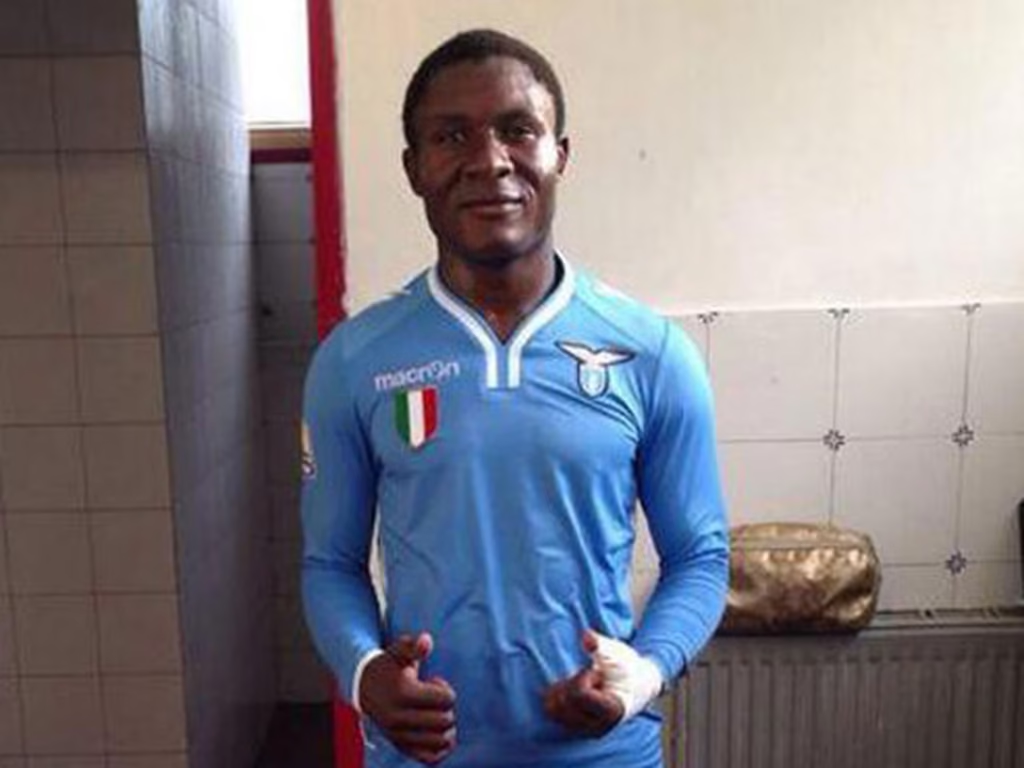
Joseph Minala knows that better than anyone. In 2014, at 17, he was one of the most promising young midfielders at Lazio. Then a website claimed he was actually 42. It was not true, it was proven not to be true, and yet more than a decade later, he says he is still paying for it.
The Claim That Went Around the World
Minala was born in Yaounde, Cameroon, in August 1996. He joined Lazio in the summer of 2013 after being scouted, and he was quickly seen as a real prospect in the club’s youth set-up. By his own account, he had also been close to signing for Napoli before he chose Lazio.
In February 2014, a Senegalese website called Senego published a story claiming that Minala had altered his passport. According to the article, he had knocked 25 years off his real age, which would have made him 42 rather than 17.
It sounds ridiculous now. At the time, it went viral. Jokes about how old he looked spread across social media, and the story took on a life of its own.
The Investigation That Cleared Him
Lazio stood by him straight away. The club said his documents were legitimate, and Minala and his agent produced paperwork confirming his age.
The Italian Football Federation opened an investigation of its own, and in May 2014 it closed the case without finding any irregularities. In other words, the official verdict was clear. He was 17, exactly as he had always said.
The website that started it all no longer even exists. The story, unfortunately, does.
The Damage That Stayed
This is the part that I find hard to read. Being cleared should have been the end of it. Instead, Minala’s career never really recovered.
He stepped up to Lazio’s senior side in 2014 but played only four first-team matches for the club. He went out on loan to Serie B sides Bari and Latina, then had a strong spell of around two and a half seasons at Salernitana. He even tried China, joining Qingdao Huanghai and making 15 appearances before returning to Rome.
Lazio kept him on the books for years. By the end, he was reported to be earning around £11,500 a week, up from about £600 a week when he first signed. But a first-team place never came, and when his contract finally ran out in 2021, he joined Serie C side Lucchese on a one-year deal.
After that, he became a journeyman. He played for Olbia in Sardinia and Liepaja in Latvia before moving to Malta, where he turned out for Sliema Wanderers and Gzira United. Today he is 30 and plays for Marsaxlokk.
In His Own Words
Minala has spoken about all of this with real honesty. Speaking to the Argentine newspaper Ole, he said he had lost many opportunities and that many doors had closed to him because of the whole story.
He also pointed out something that I think says everything about how the internet works. When you search his name on Google, the first thing that still comes up is the lie.
In an interview with SO FOOT in 2024, he went even further. He said he had been dejected at the time and could not understand why people kept bringing the age story up. Then he said something that stopped me in my tracks. He would have preferred to have actually lied about his age, because at least then he would be paying for something he had done.
Instead, as he put it, doors were closed to him for something he was innocent of.
Why the Story Was So Easy to Believe
I think it is worth being honest about why this hoax spread so fast. Age fraud is a real problem in football, and it is not a new one. FIFA has used MRI scans on players at its under-17 tournaments since 2009 to check that they are the age they say they are.
That history made a lot of people quick to believe the worst about a young African player who looked older than his years. It should not have. A player’s appearance tells you nothing about his birth certificate, and plenty of teenagers in every country look like grown men by 17.
The problem is that once the joke had been made, the facts did not matter. The investigation that cleared him got a fraction of the attention that the rumour did. Most people who laughed at the original story never saw the follow-up.
What It Does to a Young Player
It is easy to underestimate what this kind of thing does to a teenager. Minala had left his home country, moved to Italy and joined one of the biggest clubs in the country. That is a lot to handle at 17 even when everything goes well.
Now imagine doing all of that while the whole world is laughing at you. Every time he walked out for a youth game, people were talking about his face rather than his football. Every agent and scout who looked him up saw the same joke.
I would be surprised if that did not affect him on the pitch. Confidence is everything for a young player, and it is very hard to perform when you know every mistake will be put down to the idea that you are a fraud.
The Clubs Who Did Not Take the Risk
There is a quieter cost too. Clubs are cautious by nature. If a director of football is choosing between two midfielders of similar ability, and one of them comes with a viral controversy attached, I suspect most will take the safer option.
That does not make it right. Minala was cleared, and he deserved to be judged on his football. But I think it explains why the moves that came his way were loans and short-term deals rather than the step up his early talent suggested.
As a Palace fan, I have seen plenty of young players come through with big expectations and not quite make it. That is football, and it happens for all sorts of reasons. What makes Minala’s story different is that the reason was never anything to do with him.
Still Not Giving Up
What I admire most is that he has not let it make him bitter. In that SO FOOT interview, he said he was lucky to make a living from his sport, that it was already a privilege, and that he still enjoyed training every day.
He also said he was not giving up, and that a career is long. He is playing in Malta at 30, still a professional footballer twelve years after the story first broke.
My Verdict
I think Minala’s story should be required reading for anyone who has ever shared a football rumour without checking it. A website that no longer exists made a claim that was proven false within three months, and a young man is still answering for it more than a decade later.
He did nothing wrong. He was a talented teenager who signed for a big club, and he was turned into a punchline by people who never knew him.
The question is how many other careers have been quietly shaped by a story that was never true, and whether anyone who shared Minala’s would even remember doing it.