
I want to tell you about a moment that happened to me personally this season that perfectly captures everything wrong with the offside rule in modern football.
Crystal Palace versus Tottenham. Ismaila Sarr picks up the ball, drives forward, and strikes it into the far corner. It deflects past Guglielmo Vicario and the Palace end goes absolutely berserk. I am on my feet. The people around me are on their feet. For about thirty seconds it is one of those moments that reminds you exactly why you gave your heart to this football club as a seven year old.
Then the screen. Then the wait. Then the decision.
Offside. Sarr’s forehead had strayed beyond the last defender. His forehead. Not his foot, not his shoulder, not any part of his body that could conceivably have been used to score the goal. His forehead, in a position that would have been physically impossible to detect with the human eye at match speed, had crossed an invisible line by what the technology determined was a measurable margin.
Joe Hart, watching on TNT Sports, said what every single person in that ground and watching at home was thinking. None of it looks right.
He was correct. None of it does look right. And I am done waiting for the people running football to fix something they have had years to sort out and have only managed to make worse.
The offside rule needs to be torn up and rebuilt from scratch. Not tweaked. Not clarified. Rebuilt.
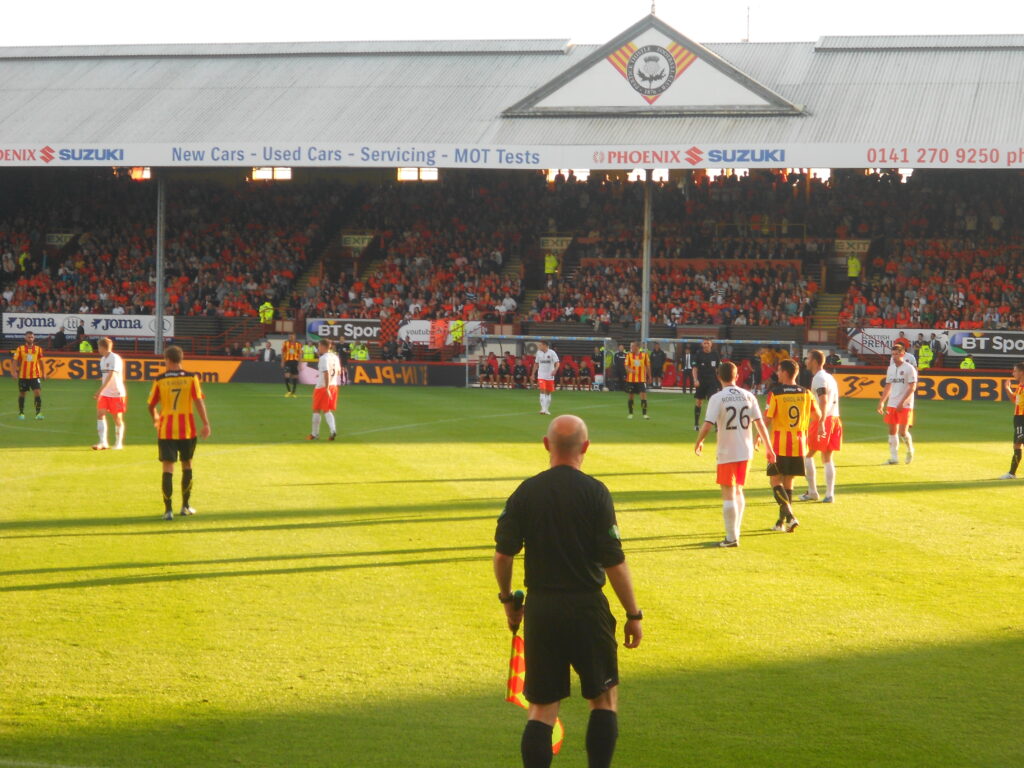
What the Rule Actually Says and Why Nobody Can Apply It
Let me try to explain the current offside law in plain English and I want you to note, as I do, how quickly plain English becomes insufficient.
A player is offside if any part of their body that can be used to score a goal is nearer to the opponent’s goal line than both the ball and the second to last defender at the moment the ball is played. That part is reasonably clear. But then we get to the part that has been causing chaos for years.
Being in an offside position is not itself an offence. A player is only penalised for offside if they are interfering with play, interfering with an opponent, or gaining an advantage from being in that position.
Interfering with play. Interfering with an opponent. Gaining an advantage.
Three phrases that sound simple and are, in practice, so subjective that referees, VAR officials and the people who train them cannot agree on what they mean from one week to the next. Virgil van Dijk had a header disallowed at Manchester City because a Liverpool player in an offside position was deemed to be interfering with the goalkeeper’s line of vision. Thirteen days later, Nottingham Forest scored at Anfield in circumstances that were to the naked eye virtually identical and the goal was allowed to stand because the offside player was judged not to be in the goalkeeper’s line of vision.
Same rule. Same situation. Opposite outcomes. Two weeks apart.
Then there is the Eze goal against Tottenham, allowed to stand despite two Arsenal players standing directly between Eze and the Spurs goalkeeper in offside positions. The Premier League Match Centre decided they were not in the goalkeeper’s line of vision and made no movement to impact an opponent. Jay Bothroyd on Ref Watch called it probably the worst decision. The people who made the decision said it was correct.
Both things cannot simultaneously be true. Which tells you the rule is not working.
How VAR Made Everything Dramatically Worse
Before VAR the offside rule had problems. It was subjective in places, inconsistently applied in others, and occasionally produced decisions that made you want to put your foot through the television. But it moved quickly. The flag went up or it did not. Play continued or it stopped. Within seconds everyone knew where they stood and the game moved on.
VAR changed that in the worst possible way. It took a rule that was already complicated and applied forensic scrutiny to it in a way that revealed every crack and contradiction simultaneously.
The semi automated offside technology used in the Premier League is capable of measuring body positions to the millimetre. It draws lines across freeze frames of fast moving athletes to determine whether a toe or a shoulder or, in Sarr’s case, a forehead has crossed an invisible line at the precise moment a pass was played. The precision is extraordinary. The outcomes it produces are frequently absurd.
And here is the contradiction that sits at the heart of the whole system and that I genuinely cannot believe has not caused more outrage than it has. The Premier League’s semi automated technology has a built in tolerance of approximately five centimetres. A player can be up to five centimetres beyond the last defender and still be given onside because the system acknowledges its own margin of error.
Five centimetres. That is roughly two inches. That is about the width of two fingers held together.
Florian Wirtz scored for Liverpool against Fulham in January in a goal that replays appeared to show him being marginally offside before receiving the pass. The goal stood. Fulham’s manager Marco Silva was furious. The reason it stood, explained in technical language that required several subsequent explanations to fully understand, came down to which specific frame of footage VAR chose to analyse and how the five centimetre tolerance was applied.
Silva opened an official dialogue with PGMOL. He is still waiting for a response that fully satisfies him. I am not surprised. I am not sure a satisfying response exists.
So we have a system that is precise enough to rule out a goal because a player’s forehead is marginally beyond a defender, while simultaneously containing a built in tolerance that allows goals to stand when players are measurably beyond the last defender. Precise and imprecise at the same time. Strict and lenient depending on which side of the five centimetre line you fall on.
That is not a functioning system. That is a functioning contradiction.
The Interfering With Play Nightmare
The grey area around interfering with play has become so vast and so inconsistently policed that it has effectively created a second offside rule operating alongside the first one, with its own logic and its own outcomes that frequently bear no relationship to what happened the previous week.
I already mentioned the Van Dijk and Forest incidents. Let me add the Sarr situation at Selhurst back into this because it is relevant to the interfering with play question in a specific way.
The goal was ruled out because Sarr himself was in an offside position when he received the ball and struck it. That element is at least the straightforward part of the rule working as intended, even if the marginal nature of the offside position is infuriating. But the broader question of when a player in an offside position is or is not interfering with play has produced so many contradictory decisions this season alone that former Premier League referee Dermot Gallagher has called publicly for clarity.
Clarity. The word that gets used every time the offside rule produces another controversy. Clarity is coming. Clarity is being worked on. Clarity will be delivered in the next set of guidance to match officials.
It never arrives. Because you cannot deliver clarity on a rule that is fundamentally unclear at its core. The interfering with play provision was always going to be a problem because it asks officials to make a judgment about intent and impact in real time at high speed. VAR slows everything down and applies that judgment retrospectively, which does not make it more consistent. It just makes the inconsistency more visible and more maddening.
The Daylight Offside Trial and Why I Think Wenger Is Right
Here is the part of this piece that I suspect will generate the most debate, but I want to make the argument clearly because I genuinely believe it.
Arsene Wenger has been pushing for years for what has become known as the daylight offside rule. Under his proposal, a player is only deemed offside if there is a clear gap, or daylight, between themselves and the last defender. In other words, you are onside if any part of your body that can score is level with or behind the relevant defender. You are only offside if you are fully beyond them with visible separation.
FIFA is currently trialling this in the Canadian Premier League. The first goal under the new rule has already been scored. A goal that would have been disallowed under the current law was allowed to stand because the attacker had a part of his body level with the last defender even though another part had crossed the line.
The critics of the daylight rule argue it will force teams to defend deeper, to drop off and give up space rather than risk playing an aggressive offside line. That is a legitimate concern and one that deserves to be taken seriously. Defensive tactics would adapt and some of those adaptations might not be pretty.
But I think Wenger is right. And I think he is right for a very simple reason.
The current rule has produced armpit offsides. Toenail offsides. Forehead offsides. Decisions that require technology measuring to the millimetre to detect, overturning goals that the human eye cannot distinguish from perfectly legitimate ones, killing celebrations and crushing moments of joy in the name of a precision that is itself built on a five centimetre tolerance that undermines the entire premise.
The daylight rule would end all of that overnight. If there is no visible gap between the attacker and the defender, the goal stands. Referees and VAR officials can make that determination quickly, consistently and in a way that actually looks right to the human eye watching the footage.
None of it looks right, Joe Hart said. Under the daylight rule, it would look right almost every time. That matters more than people in positions of authority within football are willing to admit.
Rebuild It From Scratch
The offside rule has been tinkered with, clarified, reinterpreted and technologically enhanced to the point where it now requires a paragraph of technical explanation to understand a single decision and still leaves managers, players, pundits and fans unable to agree on whether the right call was made.
That is not a rule that is being imperfectly applied. That is a rule that is broken.
The Sarr decision at Selhurst is still in my head months later. Not because it cost Palace points, though it did, but because it represents everything that has gone wrong with how offside is policed in the modern game. A goal disallowed because technology detected something no human being could see, under a rule that cannot be consistently applied, by a system that simultaneously claims millimetre precision and a five centimetre tolerance.
Football deserves better than this. The players deserve better. The fans in the grounds and watching at home deserve better. The officials being asked to apply an unworkable rule in real time deserve better.
Start the daylight trial in the Premier League. Take Wenger’s proposal seriously. And in the meantime, have an honest conversation about whether the current offside rule is serving the game or simply generating controversy, confusion and an endless parade of moments where the right response is none of it looks right.
Because right now, none of it does.