
Last year I found myself in Chicago with a couple of days to spare and the kind of spontaneous energy that only comes from being in a city you have never properly explored before.
On a Tuesday afternoon I decided I wanted to go to an NHL game. I picked up my phone, went online, found tickets to see the Blackhawks at the United Center within about four minutes, paid a price that did not make my eyes water, and walked in that evening without a single moment of stress or complication.
Two days later I did the same thing for a Bulls NBA game. Same process. Same ease. Same experience of being a casual sports fan in a city that actually wants casual sports fans to attend its games.
I came home to England buzzing about both experiences and, as any football obsessed person inevitably does, immediately started thinking about when I could next get to a Premier League game. A different club to my own, just for the experience. Somewhere I had not been before.
I have still not managed it.
Not because I did not try. Not because I was not prepared to pay a fair price. But because the process of buying a Premier League ticket as anything other than a season ticket holder or a club member with years of accumulated loyalty points is so Byzantine, so frustrating and so fundamentally weighted against the casual or neutral fan that it borders on the absurd.
The best football league in the world is also one of the hardest sporting events on the planet to actually attend. And that contradiction should embarrass everyone running it.
What Buying a Premier League Ticket Actually Involves
Let us walk through what the process actually looks like for someone who wants to attend a Premier League game without a season ticket, because most coverage of this issue glosses over just how genuinely difficult it is.
Start with the season ticket waiting list. At the biggest clubs the wait is not months. It is years. Arsenal’s waiting list has at various points stretched to over forty thousand people. Liverpool’s is similarly vast. Manchester United, Chelsea, Tottenham, all of them operate waiting lists that make the idea of ever owning a season ticket a distant aspiration for most fans rather than a realistic near term prospect.
So you look at the membership scheme. Most Premier League clubs operate tiered membership systems that give you access to ticket ballots or priority purchase windows before general sale. Sounds reasonable in principle.
In practice it means paying an annual membership fee for the privilege of entering a lottery that may or may not produce a ticket, and where your chances are determined by a points system based on how many games you have previously attended, which of course is difficult if you cannot get tickets in the first place.
The general sale, if one exists at all for a high demand fixture, typically lasts minutes. Sometimes seconds. Bots and resellers have industrialised the purchase process to the point where human beings clicking refresh on a browser have almost no chance against automated systems designed to hoover up inventory the moment it becomes available.
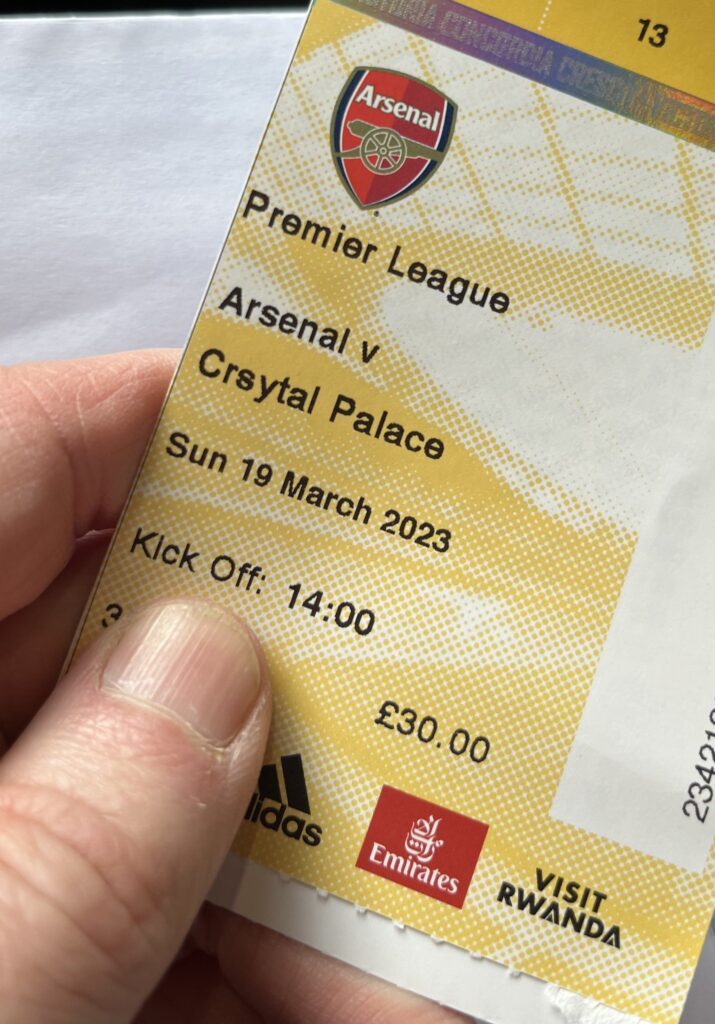
And then there is the secondary market. Where those tickets reappear minutes later at two, three, sometimes five times the face value, sold by people who never had any intention of attending the game and exist purely to extract money from the gap between what the club charges and what a desperate fan will pay.
For a neutral fan, someone who simply wants to experience a Premier League atmosphere at a ground they have not visited before, the realistic options are either the secondary market at an eye watering premium or accepting that it probably is not happening.
Who Is Actually Getting the Tickets
Understanding why this situation exists requires looking honestly at who is absorbing the ticket inventory that the clubs produce each season.
Season ticket holders take the largest share and that is entirely reasonable. Their loyalty deserves to be rewarded and their seats should be protected. But season tickets at most Premier League clubs represent a closed ecosystem. The same people in the same seats year after year, with very little turnover and very little opportunity for new supporters to break in.
Corporate hospitality accounts for a significant chunk of every Premier League ground. The premium seats, the boxes, the padded hospitality areas with their three course meals and complimentary programmes, all of it takes capacity away from the general public and places it in the hands of businesses entertaining clients who in many cases have only a passing interest in the football itself. Walk through the hospitality areas at half time at any Premier League ground and count how many people are watching the match versus how many are networking over a glass of wine.
Then there are the touts and the resellers. Some operating legally through officially sanctioned resale platforms, others operating in the grey and black markets that exist around every major stadium on match day. This entire industry exists because the gap between face value and market value is so large that there is serious money to be made exploiting it. The clubs know this. They have always known this. The response has been largely inadequate.
And then there are the tourists.
This is the part of the conversation that tends to make people uncomfortable but needs to be said plainly. Walk around the concourses at a high profile Premier League fixture, particularly in London, and you will hear as much American, Australian, Japanese and Middle Eastern English as you will hear local accents. Visitors from around the world for whom a Premier League game is a bucket list experience, a once in a lifetime trip, something to tell people about when they get home.
These visitors are willing and able to pay whatever the secondary market asks without hesitation. A ticket that costs a local fan three months of deliberation and a painful hit to the wallet represents a rounding error on a transatlantic holiday budget. The secondary market has identified this and serves it enthusiastically.
The result is a situation where the people most likely to actually get into a Premier League game on any given weekend are either longstanding season ticket holders, corporate guests, or tourists paying well over the odds on the secondary market. The ordinary football fan who just wants to go to a game sits somewhere below all of them in the queue.
Why American Sports Get This Right
The contrast with North American sport is not just anecdotal. It reflects a fundamentally different philosophy about what a sporting event is for and who it should be accessible to.
The NFL, NBA and NHL all operate in a commercial environment that is every bit as money driven as the Premier League. These are not charities. They are billion dollar businesses with franchise valuations that dwarf most football clubs. And yet the experience of attending one of their games as a casual or neutral fan is incomparably easier than attending a Premier League match.
The reasons are partly structural. American sports venues are generally larger, with the NBA’s United Center holding over twenty thousand and NFL stadiums regularly exceeding sixty or seventy thousand. More capacity means more tickets available for the general public even after season ticket holders and corporate packages take their share.
But it is also cultural. American sports have always understood that the casual fan is part of the product. The atmosphere in an NBA arena or an NHL rink is built in part on the energy of people who are there for the experience as much as the result. Making it easy for those people to attend is not a commercial compromise. It is a commercial strategy.
The Premier League has never fully embraced that philosophy. It has instead allowed a loyalty based model to dominate, which rewards long standing supporters but creates an almost impenetrable barrier for anyone outside that ecosystem.
In a league that generates billions from global television audiences and markets itself aggressively to fans in every corner of the world, the inability of most of those fans to actually attend a game when they visit the country is a genuine strategic failure that the people running the league seem remarkably unbothered by.
The Contradiction at the Heart of the Premier League
There is a version of this argument that club executives will recognise and dismiss quickly. Demand exceeds supply. There are more people who want to attend than there are seats available. That is a problem every successful sports league would love to have.
And yes, that is true up to a point. The Premier League’s popularity is real and the competition for tickets at the biggest clubs genuinely reflects that popularity.
But the response to excess demand does not have to be a system that consistently rewards resellers and tourists over genuine supporters. It does not have to be a secondary market that operates openly and profitably while ordinary fans are priced and squeezed out. It does not have to replicate, in the stadium, the same dynamic that is happening with season ticket prices and broadcast fragmentation.
The Premier League tells a story about itself as the home of the world’s greatest football, a competition built on passion, atmosphere and the kind of supporter culture that no other league can match. That story is compelling and largely true.
It would be even more compelling if the people who love the game most could actually get in to watch it.