There is a specific kind of cruelty in football that does not get talked about nearly enough.
You have agreed personal terms. The fee is done. The clubs have shaken hands. Your agent has called you and told you it is happening. You have already started thinking about where you are going to live, which shirt number you want, what it is going to feel like running out at a new ground in front of supporters who are already excited about your arrival.
And then you walk into a medical room, lie down on a table, let a doctor you have never met scan a knee or a back or a foot that has felt absolutely fine for months, and everything falls apart.
The failed medical is football’s cruellest plot twist. A dream move ending not because of anything that happened on the pitch but because of something a scanner found underneath the skin. No negotiation can fix it. No agent can talk their way around it. The body has betrayed the ambition and there is nothing anyone can do about it.
It happens more rarely than most people think. The vast majority of transfers pass the medical stage without incident. But when it goes wrong, the consequences for the player involved can be devastating, career altering and, in some cases, impossible to fully recover from.
Here are eight that collapsed at the final hurdle. Some of them worked out eventually. Some of them did not. All of them remind you that in football, nothing is done until everything is done.
Ruud van Nistelrooy to Manchester United (2000)
This is the one that every football fan of a certain age remembers because of what happened next.
In 2000, Manchester United agreed an £18.5 million deal with PSV Eindhoven to sign Van Nistelrooy. Personal terms were settled. The player travelled to Manchester. The medical was conducted. The press conference at Old Trafford was being prepared.
Then the phone rang.
Van Nistelrooy has spoken about the moment with the kind of raw honesty that only someone who lived through it can produce. He was in the car, being driven to Old Trafford for the announcement, when United’s orthopaedic surgeon called to say the MRI on his right knee was not right. Previous medial ligament damage had shown up. The car turned around. The press conference was cancelled. The deal was dead.
He described it as the lowest point of his career. The most anxious moment. The feeling of being so close to something you have dreamed about your entire professional life and having it taken away by a phone call from a doctor.
The story has a happy ending. Van Nistelrooy signed for United the following year after proving his fitness and went on to score 150 goals in 219 appearances. One of the most clinical strikers Old Trafford has ever seen. But the twelve months between the failed medical and the completed transfer must have felt like the longest year of his life.
Ederson to Manchester United (2026)
The most current example on this list and one that is still unfolding as I write this.
United had agreed the structure of a £38 million deal with Atalanta for the Brazilian midfielder Ederson. Personal terms were done. The player flew to the United States where United were conducting their pre-season preparations. Everything was in place.
Then the medical flagged issues relating to a knee injury. The deal has not been formally cancelled but it has been put on the back burner, which in transfer speak usually means one of two things. Either the clubs renegotiate the terms to reflect the medical risk, or the move quietly dies and everyone pretends it was never that close in the first place.
United are reportedly not ruling out signing the twenty seven year old in the coming weeks, which echoes the Van Nistelrooy situation from twenty six years ago. Whether Ederson gets his own redemption arc remains to be seen. The parallels with Van Nistelrooy are obvious and United fans will be hoping the outcome follows the same trajectory.
Antonio Nusa to Brentford (2024)
This one felt particularly harsh given the age of the player involved.
Brentford had agreed a £31.5 million deal with Club Brugge to sign Nusa, an eighteen year old winger with enormous potential and the kind of directness that Thomas Frank’s system thrives on. The deal was done. The player was ready. And then routine checks uncovered potentially serious knee and back problems that Brentford’s medical staff were not comfortable with.
The deal collapsed. Nusa was eighteen years old, staring at the wreckage of what should have been a life changing move, trying to process what had happened and what it meant for his future.
His response to the setback tells you a lot about his character. He went back to Brugge, refocused, and has since flourished. A move to RB Leipzig followed, his performances in the Bundesliga have been excellent, and he featured for Norway at this summer’s World Cup. The Brentford rejection did not break him. If anything it appears to have sharpened him.
But the experience left its mark. He has spoken about how difficult it was, how his family and friends were crucial in helping him through it, and how it took time before he could fully reset. At eighteen, being told your body is not good enough for a Premier League club is a psychological blow that some players never recover from. Nusa recovered. Not all of them do.
Loic Remy to Liverpool (2014)
This one remains genuinely baffling more than a decade later.
Remy had agreed personal terms with Liverpool. He had travelled to the United States where the club were on their pre-season tour. He had undergone a medical in Boston. Liverpool had offered him the number seven shirt vacated by Luis Suarez. The deal was worth £8 million from Queens Park Rangers and by every external measure it was done.
Then it collapsed on medical grounds and nobody could adequately explain why.
Harry Redknapp, the QPR manager, was publicly bewildered. He pointed out that Remy had passed stringent medicals at Marseille, at Newcastle, and with the French national team before the World Cup. The idea that a player who had been cleared by multiple medical teams across multiple countries could fail a medical at Liverpool did not make sense to him and, reading his quotes back now, it still does not entirely make sense.
Liverpool never publicly disclosed what the medical found. Remy went on to sign for Chelsea and played Premier League football without any apparent fitness issues. Whatever the medical team in Boston detected was either genuinely concerning and subsequently resolved or was used as a reason to pull out of a deal that someone at Liverpool had decided they no longer wanted to complete.
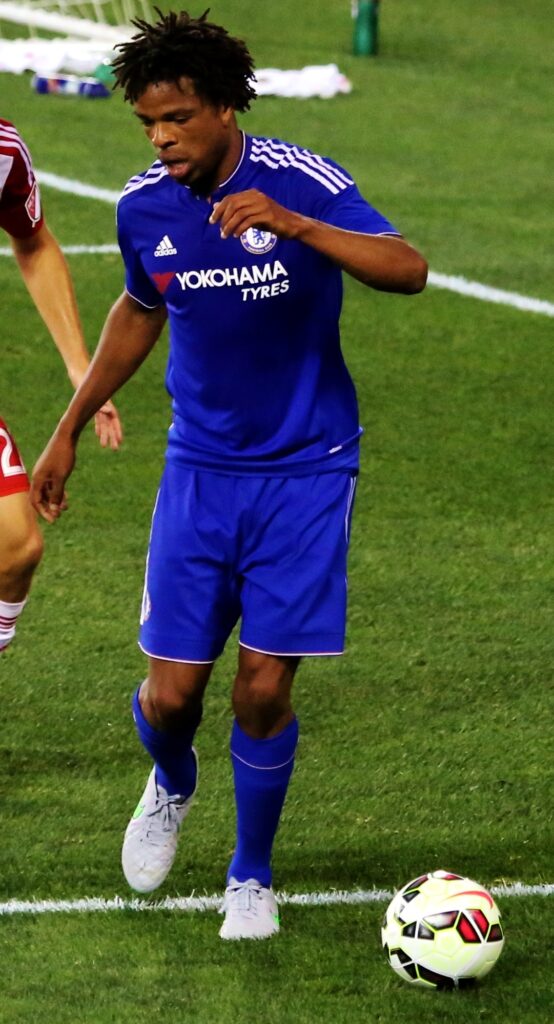
The truth is probably somewhere in the middle. But the mystery of Remy’s failed Liverpool medical remains one of the more peculiar transfer stories of the past decade.
Jordan Lukaku to Newcastle United (2019)
The younger brother of Romelu, Jordan Lukaku was on the verge of signing for Newcastle in a deal worth approximately €21 million from Lazio. Rafa Benitez wanted him. The photo was taken. Everything was ready.
Then a knee injury relapsed during a match against Napoli in the days before the medical. Lukaku has been remarkably honest about what happened. He knew he was going to fail the medical before he even arrived in England. He went anyway, partly to prove to Lazio’s sporting director that clubs were genuinely interested in him and that the interest was real even if the timing was catastrophic.
The honesty of that admission is striking. A player knowingly walking into a medical he expects to fail, not because he thinks he can bluff his way through it but because the act of being wanted by a Premier League club mattered to him even if the move itself was no longer possible.
Newcastle signed Miguel Almiron from Atlanta United a few weeks later. Lukaku’s career never reached the heights that the Newcastle move might have provided. He last played for Turkish side Adanaspor in 2024. He is thirty one.
Marko Arnautovic to Chelsea (2009)
Chelsea agreed a £12 million deal with FC Twente for Arnautovic when he was still a teenager with enormous potential and the kind of raw talent that justified a significant fee for a player who had barely played senior football.
The medical discovered a fracture in his foot. Chelsea walked away. The move that could have accelerated Arnautovic’s career by several years and placed him at one of the biggest clubs in Europe evaporated because of a broken bone that he may not have even known was there.
His career took a significantly longer and more circuitous route to the top as a result. A loan to Inter Milan that produced three appearances. A move to Werder Bremen. Then Stoke City, West Ham, a spell in China, Bologna, back to Inter, and now Red Star Belgrade in Serbia.
Arnautovic has had a perfectly respectable career by most standards. But the question of what might have happened if the Chelsea medical had gone differently, if he had spent his formative years at Stamford Bridge rather than bouncing between clubs across multiple countries, is one of those football hypotheticals that has no answer but invites endless speculation.
Neven Subotic to Middlesbrough (2016)
Subotic was a genuinely accomplished defender by the time Middlesbrough came calling. A Bundesliga winner with Borussia Dortmund, a Champions League finalist, a player whose CV warranted significantly more than a move to a newly promoted Premier League side.
But Middlesbrough were offering Premier League football and Subotic wanted to play in England. The move was close. The medical was conducted. And then a rib injury was detected that required surgery and that ended any possibility of the transfer completing.
His response to the collapsed move was touching in its vulnerability. He talked about looking forward to the new season like a small boy who could finally live his dream. There was nothing cynical about it. No agent speak, no diplomatic platitudes. Just a man who wanted to play football in England and was told by a doctor that his body would not allow it.
He retired in 2021 after spells at Saint Etienne and Union Berlin without ever playing in the Premier League. The dream he described stayed exactly that.
Gary Breen to Inter Milan (2002)
This might be the most heartbreaking example on the entire list because of the circumstances and because of how openly Breen has spoken about what it did to him.
Breen had just had an impressive World Cup with the Republic of Ireland in 2002. He was available on a free transfer. Inter Milan, one of the biggest clubs in the world, wanted to sign him. At twenty eight, in the prime of his career, the timing was perfect.
The medical found something in his knee. Inter walked away. The dream move to Serie A, the kind of opportunity that a player of Breen’s profile gets once in a lifetime if they get it at all, was gone.
He has spoken about struggling to get over it. About not being able to get it out of his head. About knowing that it was a once in a lifetime opportunity and watching it disappear because a doctor in Milan was concerned about a knee that Breen believed was perfectly functional.
His point about checking any footballer’s knee and finding something is a valid one. The human body is not a machine. Years of professional football produce wear and tear that scanners will detect regardless of whether the player is experiencing any symptoms or any limitation in their performance. The question of where the line sits between genuine medical risk and excessive caution is one that every club’s medical department answers differently.
For Breen, the answer Inter’s doctors gave was the wrong one. And he has spent over two decades living with the consequences.
The Cruelty and the Lesson
Eight players. Eight moves that should have happened. Eight moments where everything was in place and the only thing standing between a footballer and the next chapter of his career was a scan that found something the player did not know was there or could not control.
Some of them recovered. Van Nistelrooy signed for United a year later and became a legend. Nusa went to Leipzig and thrived. Remy joined Chelsea and played Premier League football for years.
Others were not so fortunate. Breen never got his Inter move. Lukaku never reached the level the Newcastle transfer might have taken him to. Subotic never played in England.
The failed medical is a reminder of something that football prefers not to think about too often. The players are human beings with human bodies that break and wear and deteriorate in ways that are sometimes invisible until a scanner reveals them. The transfer market treats players as assets. The medical room reminds everyone that they are people.
And sometimes the difference between a dream fulfilled and a dream destroyed is a phone call from a doctor that nobody saw coming.