
There is a moment that every football fan knows intimately. Your striker latches onto a through ball, rounds the keeper, slots it into the net. The ground erupts. You grab the person next to you, a stranger, your best mate, your dad, it does not matter. Pure instinct. Pure joy. The kind of feeling you cannot manufacture or replicate anywhere else in life.
Then everyone stops. Eyes drift to the big screen. Arms fold. The celebration dies in the throat. And you wait.
That moment, that specific death of spontaneous joy, is VAR’s greatest and most unforgivable crime against football. And no amount of tweaking, reviewing or reforming is going to bring it back.
It is time to scrap VAR entirely. Not reform it. Not review it. Scrap it.
What We Were Promised
Cast your mind back to 2019 when VAR arrived in the Premier League. The sell was straightforward and on the surface, difficult to argue with. Technology would help referees get the big calls right. Clear and obvious errors would be caught. Goals that should not stand would be ruled out. Goals that should stand would be given. Fairness would prevail.
Who could argue with fairness? Nobody. And that was precisely the point.
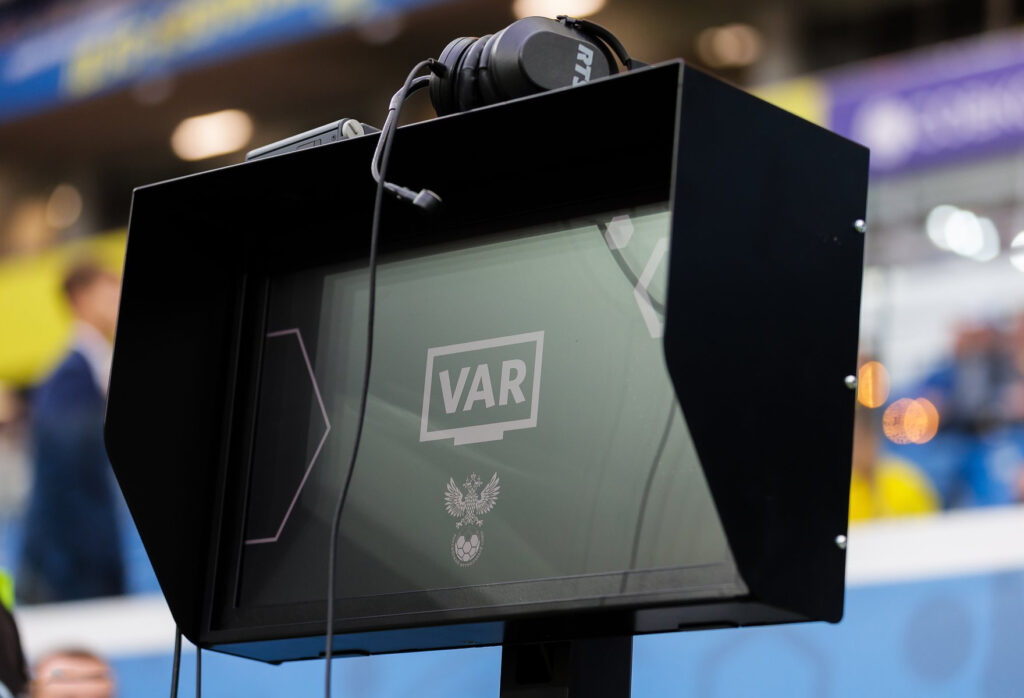
The football authorities presented VAR as the future. A modernisation of a game that had for too long been at the mercy of human error. Remember the Frank Lampard ghost goal at the 2010 World Cup? Remember Maradona’s Hand of God? VAR would consign those moments to history. The game would be better for it. Cleaner. More just.
Seven years on, ask any fan in any ground in the country whether the game feels cleaner or more just and see what answer you get.
What VAR Actually Delivered
The reality of VAR has been so far removed from the promise that it would almost be funny if it had not caused so much genuine damage to the match day experience.
Decisions that once took seconds now take minutes. Fans stand in grounds with no idea what is happening or why. Commentators fill dead air with speculation. Players mill around looking at screens. The referee disappears into a pitchside monitor like a man trying to avoid a difficult conversation.
And after all of that? After the delays, the replays, the lines drawn across screens to measure whether a striker’s armpit was offside? VAR still gets it wrong. Regularly. Embarrassingly. In ways that leave managers, players and supporters absolutely furious.
The inconsistency has been staggering. Identical incidents are handled differently from one week to the next. What constitutes a clear and obvious error appears to shift depending on which official is sitting in Stockley Park on any given afternoon. Handball calls that would have been waved away without a second thought are now subjected to multiple angles and still produce the wrong decision half the time.
Fans have been sold a system built on the promise of accuracy that routinely fails to deliver it. They have simply also lost the best parts of the game in the process.
The Human Element Was Never the Problem
There is a romantic argument that referee mistakes are part of football. Part of its fabric. Part of what gives the game its drama and its talking points. Your grandad moaned about the referee. His grandad moaned about the referee. It is as old as the game itself.
But you do not need to be romantic about it to make the case against VAR. The practical argument is just as strong.
Referees make mistakes. VAR makes mistakes. The difference is that referee mistakes happen in real time, are processed in real time, and the game moves on. VAR mistakes happen after a lengthy delay, are processed after a lengthy delay, and the game grinds to a halt while everyone stands around feeling vaguely confused and faintly ridiculous.
The human element was never the problem VAR claimed it was solving. The problem was that football, like all sport, is imperfect. And imperfection is not a flaw to be engineered out. It is a feature. It is what makes it matter.
What We Lost
Let us be honest about what VAR has taken from the game because the list is longer than the authorities will ever admit.
We lost the spontaneous goal celebration. The one that starts before the ball has even hit the net because you just know. Gone. Replaced by a cautious half-cheer and a nervous glance upward.
We lost the clarity of the moment. Football used to be a game of moments. Now it is a game of reviews, angles and deliberations that drag those moments into the administrative process.
We lost trust in the officials. Paradoxically, VAR has not made fans trust referees more. It has made them trust the entire system less. Because now when a decision goes against you, it was not just a referee having a bad day. It was a conspiracy of incompetence involving multiple officials, multiple cameras and a monitor on the side of the pitch.
And we lost the version of the game that generations of fans fell in love with. The raw, flawed, beautiful, maddening version where anything could happen and you felt every second of it in your gut.
Enough
The experiment is over. Seven years of evidence points overwhelmingly in one direction. VAR has not made football fairer, more accurate or more enjoyable. It has made it slower, colder and more bureaucratic, while somehow still failing to get the big decisions consistently right.
The Premier League, to its credit, has at least begun acknowledging the problems. But tinkering around the edges of a fundamentally broken system is not the answer.
Pull the plug. Give football back its soul. Let the referee make the call, let the moment breathe, and let the fans feel what they came to feel.
Football was better before VAR. Every single person in every single ground in the country knows it. It is time the people running the game admitted it too.
Was football better before VAR, or do you think the system just needs more time to improve?