There are footballers who win trophies. There are footballers who win awards. There are footballers who accumulate statistics that survive long after the memories of the matches that produced them have faded.
And then there are footballers who make people fall in love with the game. Footballers whose impact goes beyond what they did on the pitch and into how they made you feel watching them do it. Footballers who belong to the people who stood on the terraces and sat in the stands and felt, watching this particular player, that football was the greatest thing in the world and that they were lucky to be alive at the same time as him.
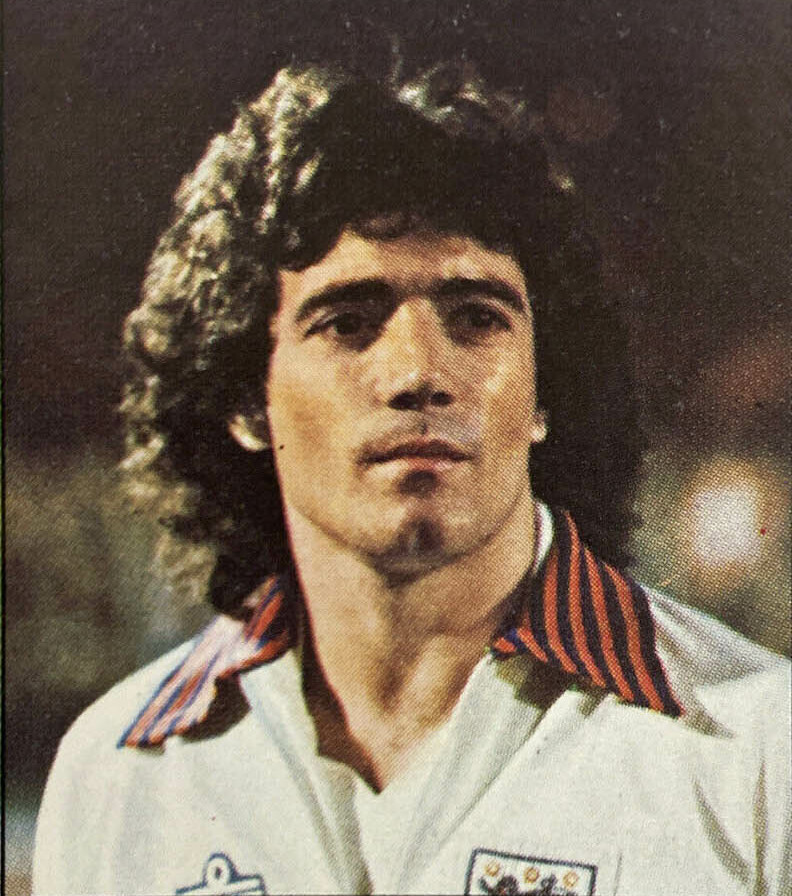
Kevin Keegan was that kind of footballer. He has died today at the age of 75, surrounded by his wife and daughters, after a battle with cancer that he faced with the same determination and the same refusal to hide from anything that defined his entire life in football.
This one is personal for me. Not because I am a Newcastle fan or a Liverpool fan or because I ever saw Keegan play. I did not. I was too young. But Kevin Keegan was one of my dad’s favourite players. Genuinely, properly, in the way that stays with someone for their whole life. Not just a player he admired or respected but one who shaped what he believed football was supposed to look like and feel like and mean.
He talked about Keegan differently to how he talked about other players. There was a warmth to it, a reverence that he did not apply lightly. When he described watching Keegan play it was not with the analytical distance of someone assessing a career retrospectively. It was with the emotion of someone who had been there, who had felt the electricity of a footballer who made everything around him feel more alive.
Growing up hearing my dad talk about Keegan taught me more about what football is supposed to be about than most of the things I have seen with my own eyes. And writing this today, knowing what his death will mean to the generation of fans who watched him the way my dad did, feels like a responsibility I want to get right.
From Doncaster to Anfield
Kevin Keegan was born in Doncaster in 1951, the son of a miner, in circumstances that gave him nothing except the hunger to make something of himself and the talent to do it. He was not discovered by a network of scouts operating across the country. He was not identified at eight years old and placed in an academy system designed to turn promising children into professional athletes. He came through at Scunthorpe United, a club in the lower divisions of English football, where he played well enough to attract the attention of the man who would change his life.
Bill Shankly signed Kevin Keegan for Liverpool in 1971 for £35,000. It was one of the great transfer decisions in the history of English football, a judgement of character and ability that Shankly made with the certainty that defined everything he did. Shankly saw something in the young Keegan that went beyond technique or pace or finishing. He saw a footballer with an engine that never stopped, a competitive drive that refused to accept anything less than everything, and a personality that would light up Anfield in a way that the supporters would never forget.
He was right about all of it.
Keegan’s years at Liverpool were extraordinary by any measure. Three First Division titles. Two UEFA Cups. The FA Cup. And in 1977, the European Cup, the ultimate prize in club football, won in Rome against Borussia Monchengladbach. Keegan was central to all of it, his energy and his goals and his sheer force of will driving a Liverpool side that became the dominant force in English football during the 1970s.
What the statistics do not capture is what Keegan looked like playing football. He was not the most technically gifted player of his generation. He was not blessed with the natural elegance of a Johan Cruyff or the devastating skill of a George Best. What he had was something that connected with supporters on a level that pure technique alone cannot reach. He played with his heart visible on the pitch, every tackle contested, every run made at full speed, every goal celebrated with the uninhibited joy of someone who genuinely could not believe his luck at being allowed to do this for a living.
The Kop loved him for it. They loved him because he was one of them, a working class kid from Yorkshire who had made it to the top of the game through effort and determination and an absolute refusal to accept that anything was beyond him. He was not above them. He was of them. And that connection, between a player and a crowd, is the rarest and most valuable thing in football.
My dad saw that connection from the stands. He carried it with him for fifty years. That tells you everything about what Kevin Keegan meant to the people who watched him.
Hamburg and the Ballon d’Or
In 1977, having won the European Cup with Liverpool, Keegan did something that very few English footballers of his era contemplated. He left England.
He joined Hamburg in the Bundesliga at a time when English players moving abroad was genuinely unusual, an act of ambition and courage that reflected the same qualities that had taken him from Scunthorpe to Anfield in the first place. Germany was a different football culture, a different language, a different way of life. Keegan embraced all of it.
What he achieved at Hamburg established him as one of the finest players on the planet. He won the Bundesliga title. He reached the European Cup final, losing to Nottingham Forest in 1980 in a tournament that Brian Clough’s remarkable side won for the second consecutive year. And he won the Ballon d’Or. Twice. In consecutive years. The European Footballer of the Year in 1978 and 1979, an honour that placed him alongside the greatest players the continent had ever produced.
A boy from Doncaster, the son of a miner, standing on a stage in Paris being told he was the best footballer in Europe. Twice. The scale of that journey deserves a moment of quiet recognition every time it is recounted.
Newcastle and the Love Affair
Keegan returned to England, playing for Southampton before joining Newcastle United in 1982. It was at St James’ Park that the final chapter of his playing career produced something that transcended results and statistics and entered the realm of genuine romance between a footballer and a football club.
Newcastle were in the Second Division when Keegan arrived. The club was underperforming, the ground was half empty on some matchdays, and the mood around the place was flat in the way that only a big club in a small division can feel flat. Keegan changed all of that almost immediately. His presence alone lifted everything. Attendances rose. The atmosphere changed. The sense that something was happening, that someone who cared had arrived and was going to make things better, was palpable from the moment he pulled on the black and white shirt.
He helped Newcastle win promotion in 1984 and retired at the end of that season, his final game at St James’ Park producing scenes of genuine emotion from supporters who understood that what they had just witnessed was not simply a footballer finishing his career but something deeper and more personal.
Sixty three England caps. Twenty one international goals. The 1982 World Cup in Spain. A career that spanned Scunthorpe, Liverpool, Hamburg, Southampton and Newcastle and that left an indelible mark at every single stop.
The Manager Who Wore His Heart on His Sleeve
When Keegan returned to Newcastle as manager in 1992, nobody could have predicted what was about to happen. The club was in the Second Division again, struggling, directionless, in danger of slipping further. Within four years Keegan had built a side that came within a whisker of winning the Premier League title and produced some of the most exhilarating football English football has ever seen.
The Entertainers, as the 1995/96 Newcastle side became known, played football of a quality and an attacking abandon that made them the most watchable team in the country. Andy Cole, then Les Ferdinand, Peter Beardsley, David Ginola, Tino Asprilla, Rob Lee, a squad assembled with an eye for flair and excitement that reflected everything Keegan believed football should be.
They led the Premier League by twelve points in January 1996. They did not win it. Manchester United, under Sir Alex Ferguson, reeled them in over the second half of the season in a title race that produced the most famous moment of Keegan’s managerial career and one of the most iconic moments in Premier League history.
The rant. April 29, 1996. Sky Sports, live on air. Ferguson had suggested that teams tried harder against Manchester United than they did against Newcastle, a piece of calculated psychological warfare designed to unsettle a manager he knew was vulnerable to exactly this kind of provocation.
Keegan’s response was extraordinary. Gripping the desk, visibly shaking with a combination of anger and emotion and frustration, he delivered the words that have been replayed more times than almost any other piece of football broadcasting in history.
“I’d love it if we beat them. Love it.”
It was raw. It was unguarded. It was everything that Kevin Keegan was as a person distilled into thirty seconds of live television. A man who could not hide what he felt, who wore every emotion on the outside, who was constitutionally incapable of the calculated detachment that Ferguson deployed with such devastating effectiveness.
Newcastle did not win the title. The collapse from twelve points clear remains one of the great what-ifs in English football history. And yet that season, and that rant, cemented Keegan’s place in the hearts of Newcastle supporters and football supporters more broadly in a way that a title win might not have matched.
Because it was honest. Because it was human. Because in a sport increasingly populated by managers who said nothing and revealed less, Kevin Keegan sat in front of a camera and showed the whole country exactly what winning and losing actually felt like to someone who cared about it with his entire being.
My dad watched that rant live. He told me about it years later with the same expression he used when he talked about watching Keegan play. Not sympathy, not amusement, but recognition. The recognition of a man watching another man who loved football the same way he did.
England and Beyond
Keegan managed England from 1999 to 2000, a spell that ended with his resignation after a defeat to Germany at the old Wembley, the last match played at the stadium before its demolition. He managed Manchester City, taking them back to the Premier League. He returned to Newcastle for a second spell that ended in frustration and resignation amid disputes with the club’s ownership.
His managerial career never quite reached the heights that his playing career achieved. The qualities that made him extraordinary as a player and as a man, the emotional openness, the inability to hide what he felt, the heart-on-sleeve approach that connected him with supporters at every club he touched, were not always assets in the cold, calculated world of football management.
But to judge Keegan as a manager by the trophies he did not win would be to miss the point of him entirely. He made football feel like it mattered. He made supporters feel like they were part of something. He built teams that played with a joy and an attacking freedom that reflected his fundamental belief that football existed to entertain the people who paid to watch it.
That belief cost him results on occasion. It also made him one of the most beloved figures in the history of English football. The trade-off tells you everything about who he was and what he valued.
The Final Battle
Keegan’s family announced in January this year that he had been diagnosed with cancer. In June, he revealed publicly that the disease had reached stage four. The news was received across the football world with the kind of collective sadness that only a truly universally loved figure can produce.
There was no tribalism in the response. Liverpool supporters, Newcastle supporters, Hamburg supporters, England supporters, fans of clubs he had never played for or managed, all of them expressed the same thing. Gratitude. Gratitude for what he had given the game, for the way he had played it, for the person he had been while doing it.
He fought the disease with the same determination he brought to everything else. He did not hide from it. He spoke about it openly. He faced it the way he faced everything in his life, head on and without pretence.
He died today, July 20, 2026, at the age of 75, surrounded by his wife Jean and his daughters Laura and Sarah. The family statement described him as a much loved husband, father and grandfather. They asked for space and privacy.
The People’s Footballer
I am sitting here trying to find the right words to close a piece about a man I never saw play and I keep coming back to the same thought.
My dad loved Kevin Keegan. Not in the casual way that football fans talk about players they enjoyed watching. In the real, lasting, permanent way that happens when a footballer connects with something inside you that goes beyond the sport itself. The way that only happens a handful of times in a lifetime, if you are lucky, when a player makes you understand why you fell in love with football in the first place.
Keegan did that for my dad’s generation in a way that I do not think any player has done quite as completely since. He was not the best player in the world, though two Ballon d’Or awards suggest he was not far off. He was something more valuable than the best. He was the most human. The most real. The most visibly, undeniably, completely alive on a football pitch.
He played like it mattered. He managed like it mattered. He lived like it mattered. And when the cameras caught him gripping that desk and telling the world he would love it if Newcastle beat Manchester United, he showed us all what it actually looks like when someone cares about something so much that they cannot contain it.
Kevin Keegan. The son of a miner from Doncaster. Three First Division titles. Two Ballon d’Or awards. European Cup winner. Sixty three England caps. A man who made millions of people love football more than they did before they watched him play.
I am going to call my dad tonight. I think he will need to talk about this one.
Rest in peace, King Kev. The people’s footballer. Always.