
Every spring, the Championship produces the best drama in English football, and it all comes down to one question. Who gets the last ticket to the Premier League? The top two clubs go up automatically, and the play-offs decide the third and final promotion place. Until now that fight involved four teams. From this season, it involves six.
It is a big change, and I have mixed feelings about it. If you want to see how it could play out for your club, you can predict how the table will look with our Championship table calculator and see who would make the top eight. Below is the full explanation of how the system has worked for decades, how the new version will work, and what I think of the change.
How do the EFL Championship play-offs work?
The Championship has 24 clubs. At the end of the season, the top two are promoted automatically, and the third promotion place goes to the winner of the play-offs. The play-offs have been part of the second tier since 1986-87, and they have always involved a fight between the clubs just below the automatic places.
For the last 40 years, the format was simple. The clubs that finished third to sixth took part, and the semi-finals were played over two legs, with third playing sixth and fourth playing fifth. The higher-placed club in each tie hosted the second leg. The winners of the two semi-finals then met in a single match at Wembley, where the winner was promoted. That final has been a one-off game since 1989-90.
If a semi-final is level on aggregate after two legs, it goes to extra time and then penalties. The final works the same way.
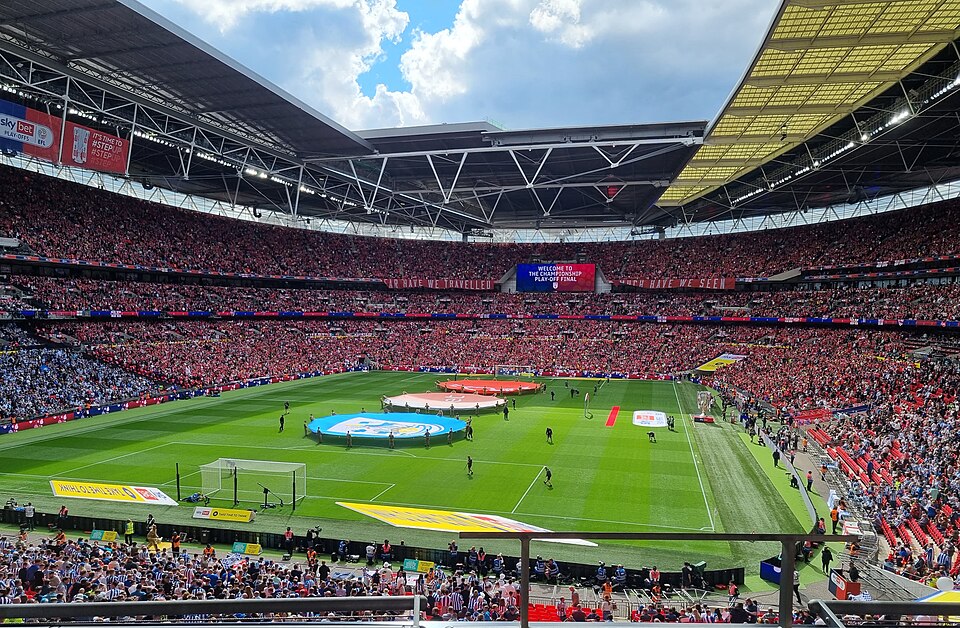
It is one of the most dramatic events in the football calendar. Last season, Hull City won promotion with a stoppage-time goal from Oli McBurnie in the final against Middlesbrough, after a chaotic build-up involving the so-called Spygate saga. The year before, Sunderland beat Sheffield United at Wembley to go up. The prize is enormous. Sunderland’s promotion was estimated to be worth at least £200 million in extra income.
How will the new play-offs work?
From the 2026-27 season, the Championship play-offs will include six teams instead of four. The first play-offs under the new system will be played in May 2027, and the format will be used across seven fixtures in total.
The EFL’s member clubs voted for the change at an extraordinary general meeting in March 2026. It needed a majority of the 24 Championship clubs and a majority of all 72 EFL clubs, and it was passed. The FA Board then approved it, and the expanded play-offs begin this season.
What is the new format for the EFL play-offs?
The new system works like this:
- Third and fourth place go straight to the semi-finals. They do not have to play in the first round.
- Fifth plays eighth, and sixth plays seventh. These one-off matches are called eliminators, and each is played at the ground of the higher-ranked club. If a match is level after 90 minutes, extra time and penalties decide it.
- The eliminator winners join third and fourth in the semi-finals. They are played over two legs, with the second leg at the home of the club that finished higher in the league.
- The semi-final winners meet at Wembley. The final takes place at the end of May, and the winner is promoted to the Premier League.
Here is how it fits together:
| Round | Fixture | Format |
|---|---|---|
| Eliminator 1 | 5th v 8th | One match at 5th’s ground |
| Eliminator 2 | 6th v 7th | One match at 6th’s ground |
| Semi-final 1 | 3rd v lowest-ranked eliminator winner | Two legs |
| Semi-final 2 | 4th v other eliminator winner | Two legs |
| Final | Semi-final winners | One match at Wembley |
There is one important detail that people often miss. The semi-final pairings are not fixed in advance. Third place will always face the lowest-ranked club that is still in the competition. For example, if eighth beats fifth and sixth beats seventh, then third will play eighth and fourth will play sixth. If fifth and sixth win, third will play sixth and fourth will play fifth.
It means finishing higher always gives you an easier route.
Who qualifies for the Championship play-offs?
The clubs that finish from third to eighth in the Championship table take part. First and second are promoted automatically, and ninth and below are out.
Under the old system, finishing seventh or eighth meant the season was over. Now it means you have a chance. Last season, Millwall finished eighth on 66 points, while Bristol City took the final play-off spot in sixth on 68. Under the new rules, Millwall would have been in the mix.
How many games would the eighth-placed team need to win?
Four. An eighth-placed club would need to win an eliminator away at fifth, then both legs of a semi-final, then the final at Wembley. That is a long way to go for a club that finished outside the top six, and I think it makes the achievement even more dramatic if it happens.
Why did the EFL change the format?
The EFL’s stated reason is to increase the number of competitive fixtures at the end of the season, and to give two more clubs the chance to reach Wembley and win promotion. EFL chief executive Trevor Birch said the change would strengthen the Championship and give more supporters a genuine opportunity.
There is also a financial side. The play-offs are among the most valuable games in world football, and more matches mean more attention. The new format copies the system that has been used in the National League since 2017-18, which has been a success in generating interest at the end of the season.
Another factor is the competition for places. A lot of Championship clubs finish in the middle of the table with nothing to play for in the last month. Extending the play-offs to eighth gives more of them something to chase.
What does the Premier League think?
Not everyone is happy. The Premier League raised concerns that the change might dilute the quality of the clubs that end up being promoted. If a team that finishes eighth, perhaps 10 or 15 points behind the leaders, can go on to win promotion, there is a risk that a weaker side arrives in the top flight.
It is a fair worry. The promoted clubs in recent seasons have often struggled, and anyone who thinks a club finishing eighth is ready for the Premier League may be disappointed. But the vote went through anyway, and the new system is here.
Will League One and League Two change too?
Not yet. There are no immediate plans to expand the play-offs in League One or League Two. The EFL has said it will assess how the new Championship format works before it considers anything further, and Sky Sports has reported that it is likely to follow in the coming years if the system is a success.
Recent Championship play-off winners
| Year | Winners | Final |
|---|---|---|
| 2020 | Fulham | Beat Brentford 2-1 |
| 2021 | Brentford | Beat Swansea City 2-0 |
| 2022 | Nottingham Forest | Beat Huddersfield Town 1-0 |
| 2023 | Luton Town | Beat Coventry City on penalties |
| 2024 | Southampton | Beat Leeds United 1-0 |
| 2025 | Sunderland | Beat Sheffield United 2-1 |
| 2026 | Hull City | Beat Middlesbrough 1-0 |
How much is the Championship play-off final worth?
It is often described as the richest game in football, because of the Premier League money attached. The prize for promotion includes huge television income and far bigger commercial revenue. Sunderland’s win in 2025 was estimated to be worth at least £200 million in extra income.
That is why it is also one of the most nerve-wracking matches a player can take part in. A single goal can change the future of a club.
What about relegation from the Championship?
The other end of the table has its own drama. Three clubs are relegated from the Championship each season, and the clubs that finish 22nd, 23rd and 24th drop into League One. They are replaced by the clubs promoted from League One, and the three clubs that go down from the Premier League drop in on top.
It is a brutal fight, and the numbers can be surprising. In 2025-26, Oxford United went down in 22nd place with 47 points, Leicester City finished 23rd on 46, and Sheffield Wednesday were bottom. West Brom stayed up in 21st on 51 points, four clear of Oxford and five clear of Leicester. Across the last ten Championship seasons, the highest total a relegated club has finished with is 51 points, a figure reached in both 2016-17 and 2023-24.
That makes survival harder to judge than it looks. If you want the full breakdown of the numbers, we explain it in our guide to how many points you need to stay up in the Championship.
Points deductions have also changed the picture. Sheffield Wednesday lost 18 points last season, 12 for entering administration and six for failing to meet payment obligations, and ended the campaign on zero. Leicester City lost six points for breaching financial rules, and West Brom were docked two in April. Leicester finished five points behind West Brom, so their deduction was the difference between staying up and going down.
I think that is the real lesson. In the Championship, the gap between a play-off place and relegation is about 18 points, but a rule breach can undo a season in an afternoon. The new play-off system will make the top end of the table more exciting, and the bottom end will stay as brutal as ever.
My Verdict
I like the new system, with a few reservations. As a fan, the extra drama is hard to argue with. More matches, more jeopardy and more clubs with something to play for in the final weeks of the season is exactly what the second tier needs. The eliminators will be brilliant television, with one match and nowhere to hide.
My concern is the one the Premier League raised. Football should reward consistency over a whole season, and finishing eighth means you have lost more games than most of the league’s top clubs. If a team that finished 15 points behind the leaders goes up, it could feel like the table has been ignored. I do not think it will happen often, since winning four games in a row is hard, but when it does, there will be arguments.
At Palace, we have spent more time worrying about the bottom of the table than the play-offs, so I will say this with an outsider’s eye. The new system will not please everyone, but it will give the Championship something it has always had in abundance, which is chaos. I think that is no bad thing.
Championship Play-Offs FAQ
How many teams are in the Championship play-offs?
Six, from the 2026-27 season. The clubs that finish third to eighth take part. Before this season, it was four.
When does the new play-off format start?
It started with the 2026-27 season, so the first play-offs under the new system will take place in May 2027.
Who hosts the eliminators?
The higher-ranked club in each tie. Fifth hosts eighth, and sixth hosts seventh.
Do the semi-finals have two legs?
Yes. The semi-finals are played over two legs, with the second leg at the home of the club that finished higher in the league.
Who plays who in the semi-finals?
Third place plays the lowest-ranked club left in the competition, and fourth plays the other eliminator winner. The pairings depend on who wins the eliminators.
Where is the Championship play-off final played?
At Wembley Stadium, at the end of May.
How many teams get promoted from the Championship?
Three. The top two go up automatically, and the play-off winner takes the third place.
Will League One and League Two get six-team play-offs?
Not at the moment. The EFL has said there are no immediate plans, but it will assess how the Championship format works before deciding.