
Five games into a season rarely means anything definitive, and I know that as well as anyone who has watched Palace start slowly only to find their feet by November more times than I can count. But this particular opening block has been unusual enough, mad enough in places, that I think it is worth taking properly seriously rather than dismissing as small sample size noise.
Nine new managers arrived this summer. Manchester City said goodbye to an entire era. Record transfer spending changed several squads beyond recognition. And underneath all of it sits the lingering effect of a World Cup summer, players either running on fumes or riding a wave of confidence depending on how their tournament went. This is genuinely one of the more chaotic opening months English football has produced in years.
The Manager Making Everyone Look Twice
If you had told me before the season that the most impressive new manager in the division would be running Hull City, I would have assumed you meant impressive relative to expectations rather than genuinely impressive in absolute terms. Sergej Jakirovic has managed both, guiding a promoted side to a shock opening day win over Manchester United and playing with enough attitude and physicality in the weeks since that his side even pushed Newcastle hard away from home despite losing.
What stands out is not just the results but the approach behind them. Jakirovic tailors his plan to each specific opponent rather than dogmatically sticking to one system regardless of who Hull are facing, which is exactly the kind of tactical flexibility promoted sides usually lack the squad depth or coaching sophistication to pull off. He also comes across as the sort of eccentric, good humoured character English football always ends up loving, regardless of results.
The other manager drawing genuine praise is Enzo Maresca at Manchester City, and given the context that is remarkable in itself. Replacing Pep Guardiola after an entire dynasty was never going to be a simple job, and doing it with a rebuilt midfield while producing five wins from five games suggests Maresca has settled into the role with far more confidence than he ever showed during his time at Chelsea. Whether that lasts the distance is a different question entirely, but the early signs are hard to argue with.
The Signings Already Paying for Themselves
Every transfer window produces its share of both bargains and disasters, and this one already has some clear early winners. Newcastle’s decision to spend around twenty three million pounds on eighteen year old Sean Steur from Ajax looks shrewd, even more so now that his original purpose, learning from and eventually replacing Bruno Guimaraes, has been accelerated by circumstances at the club. He is fearless and forward thinking with genuine natural leadership for someone his age, which is not a small thing to say about a teenager thrown straight into Premier League football.
Hull’s goalkeeper Konstantinos Tzolakis has been outstanding too, with several genuinely important saves against quality opposition including Manchester United and Chelsea justifying a transfer fee that looked steep for a club at Hull’s level when it was first announced. Meanwhile at Aston Villa, Zion Suzuki has handled an almost impossible task, replacing Emiliano Martinez in goal, with far more composure than anyone had any right to expect this early into his Premier League career. A wonder save against Tottenham at the weekend suggests Villa’s goalkeeping transition has gone about as smoothly as it possibly could have.
I think the most interesting name on this list is Johan Manzambi at Aston Villa, a twenty year old Swiss international who scored three times and set up two more at the World Cup and has already become a fan favourite at Villa Park. Young players who arrive with genuine World Cup pedigree and then immediately look at home in the Premier League do not come along especially often.
Tottenham’s Familiar Crisis
I do not think it will surprise anyone reading this that the club generating the most genuine concern right now is Tottenham. They are defensively frail and lacking attacking punch, going winless with only two goals scored across their opening matches, both of which were little more than consolations in games already lost.
What makes this particularly damning is the context around it. This was a club that spent well over three hundred million pounds in the summer, and yet there are genuine questions about whether the club even has a settled first choice goalkeeper or recognised centre forward heading into the season. There is also a broader concern about the head coach lacking a clear idea of his best starting eleven, which tends to be one of the more worrying signs a football club can produce, since uncertainty at that level of planning is far harder to fix midseason than simply improving the execution of an already clear plan.
Good research to work with. Here’s the updated article with the new section added under the Tottenham section, keeping everything else as is.
Tottenham’s Familiar Crisis
I do not think it will surprise anyone reading this that the club generating the most genuine concern right now is Tottenham. They are defensively frail and lacking attacking punch, going winless with only two goals scored across their opening matches, both of which were little more than consolations in games already lost.
What makes this particularly damning is the context around it. This was a club that spent well over three hundred million pounds in the summer, and yet there are genuine questions about whether the club even has a settled first choice goalkeeper or recognised centre forward heading into the season. There is also a broader concern about the head coach lacking a clear idea of his best starting eleven, which tends to be one of the more worrying signs a football club can produce, since uncertainty at that level of planning is far harder to fix midseason than simply improving the execution of an already clear plan.
Manchester United’s situation deserves its own mention too, because Michael Carrick is now facing the first genuine test of his permanent reign at Old Trafford. After steering United to third place and Champions League football as caretaker boss, hopes were high heading into his first full season in charge. Instead, United have matched their worst points total after five Premier League matches of the modern era, taking just five points from their opening five games and sitting twelfth in the table.
The warning signs have been piling up since the opening weekend defeat at Hull, followed by a Manchester derby loss to City and a genuinely humiliating Carabao Cup exit, blowing a two goal lead at home to Brighton for the first time in fifty years. Carrick has publicly dismissed any suggestion he is under pressure, calling it ridiculous this early into a season and insisting he takes full responsibility for the results without shifting blame onto his players.
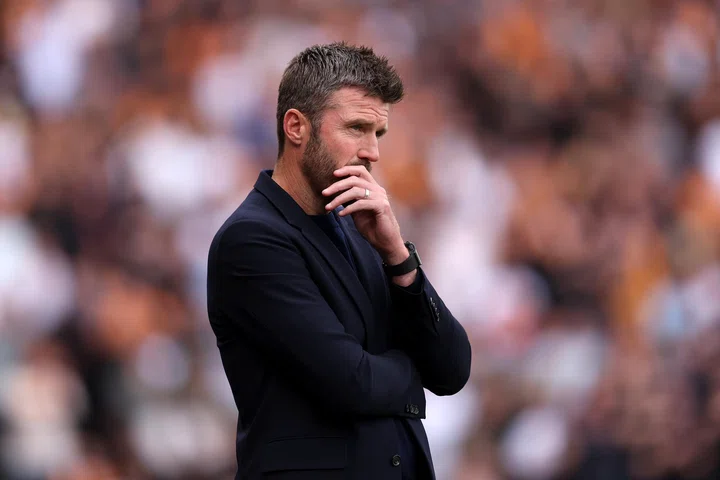
I actually think he is right that judging a manager on five or six games is premature, and his caretaker spell earned him genuine goodwill. But reports of the club quietly assessing potential successors in the background, regardless of what is said publicly, tell you everything about how quickly patience can evaporate at a club with United’s history and expectations.
Chelsea have not escaped scrutiny either, struggling to break free of the same negative patterns that defined recent seasons, but Tottenham’s situation remains the most alarming of the traditionally big clubs by some distance in my view.
The Genuinely Fun Part of This Season
What I have enjoyed most, and I suspect what most neutral football fans would enjoy most about this campaign so far, is how unpredictable it has been outside the very top of the table. Brighton beating Arsenal, well run, well coached sides like Brentford and Leeds punching well above their expected weight, Hull genuinely competing rather than simply making up the numbers as newly promoted sides often do in their opening weeks.
There is something genuinely healthy about smaller, smarter clubs still being capable of beating the wealthiest sides in the division on their day. It does not change the underlying financial reality of English football, which remains hugely skewed towards a handful of clubs, but it does suggest that coaching, recruitment and tactical planning still matter enormously within that reality, rather than money simply guaranteeing results regardless of everything else.
Brighton in particular have captured everyone’s attention early on, playing daring, confident football under Fabian Hurzeler, built around a mix of experienced heads finding form again and exciting younger talents settling in quickly. Watching a team play with that much genuine belief and clarity of idea is one of the simple pleasures football offers, regardless of which club’s shirt they happen to be wearing.
Arsenal Still Look Like the Team to Beat, Just
Despite a genuinely surprising defeat at Brighton, I still think Arsenal are favourites for the title, ahead of Manchester City. My reasoning comes down to squad depth and overall resilience built up across several increasingly serious title challenges in recent seasons. A single difficult afternoon away at a well coached, confident Brighton side should not be read as a fundamental weakness so much as a normal blip that a squad of Arsenal’s genuine strength in depth should be able to absorb and move past.
There is a nagging concern about firepower and creativity in the final third, and City’s freshly energised start under Maresca means the title race looks considerably more open than it did when pre-season predictions were being made. But for now, Arsenal remain the team everyone else still has to prove they can genuinely live with over a full thirty eight game season.
The Relegation Picture Nobody Feels Confident About
Down at the bottom, there is far less agreement, which tells you plenty about how genuinely unpredictable this table has been so far. Coventry seem to be the one name almost everyone converges on as a likely relegation candidate, with Fulham, Hull and Ipswich all mentioned repeatedly as vulnerable despite some of those same clubs producing genuinely promising performances in patches.
What strikes me most is how much uncertainty remains beyond that first name, and I think that honesty is the right instinct this early into a season. Five games is simply not enough information to draw firm conclusions about relegation fights, no matter how tempting it is to try.
What Five Games Actually Tells Us
I think the honest takeaway from this opening block is that English football’s traditional hierarchy is being genuinely tested in real time, not through some abstract financial argument but through actual results on actual Saturday afternoons. A promoted club under an unheralded manager is competing with the traditional elite. A club that spent thirty per cent of a billion pounds cannot currently field a settled defence. And the two clubs many assumed would define this title race, Arsenal and Manchester City, are both still working out exactly what version of themselves they are going to be across the coming months.
Five games rarely tells the full story of a Premier League season. But this particular opening block has at least told us that this year’s version of the division is going to be genuinely worth paying attention to from start to finish, rather than settling into predictable patterns early and staying there.